
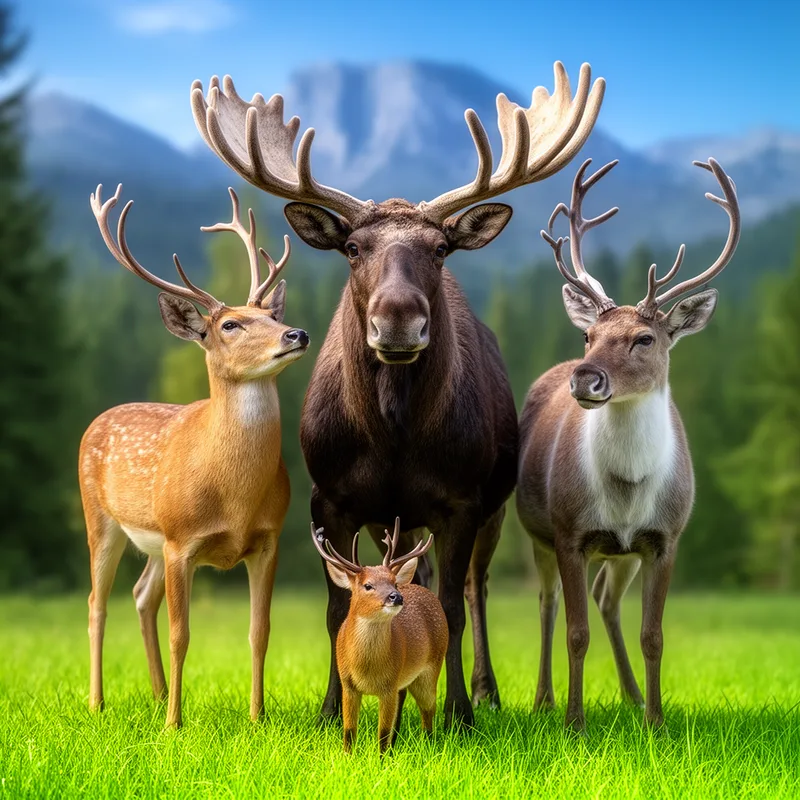
family Cervidae


 1
7.2
- noun
- /ˈfæmɪli ˈsɜrvɪdeɪ/
- Specialized
- The family Cervidae encompasses all true deer species, including moose and reindeer.
Examples
-
The family Cervidae includes well-known species such as moose, elk, and reindeer.
-
Muntjacs, which belong to the family Cervidae, are native to parts of Asia.
-
Biologists study the antler growth in various members of the family Cervidae.
-
The family Cervidae includes various species of deer.
-
Many animals in the family Cervidae are known for their antlers.
-
Research on the family Cervidae reveals fascinating insights about their social behaviors.
-
Members of the family Cervidae can be found in various habitats around the world.
Synonyms
 1
9.5
A group of animals that includes deer such as reindeer and moose
Surface Forms
Morphology
The meaning is directly and literally compositional: 'family' (a taxonomic grouping) combined with the proper taxonomic name 'Cervidae' yields the biological family of deer. This follows standard scientific naming conventions that are cross-linguistically transparent, so a B1 learner who knows both constituents would understand the MWE.
Etymology
Family Cervidae comes from the Latin word cervus, which means 'deer'. People added the common ending -idae to make a group name, so family Cervidae simply means 'the deer family'.