
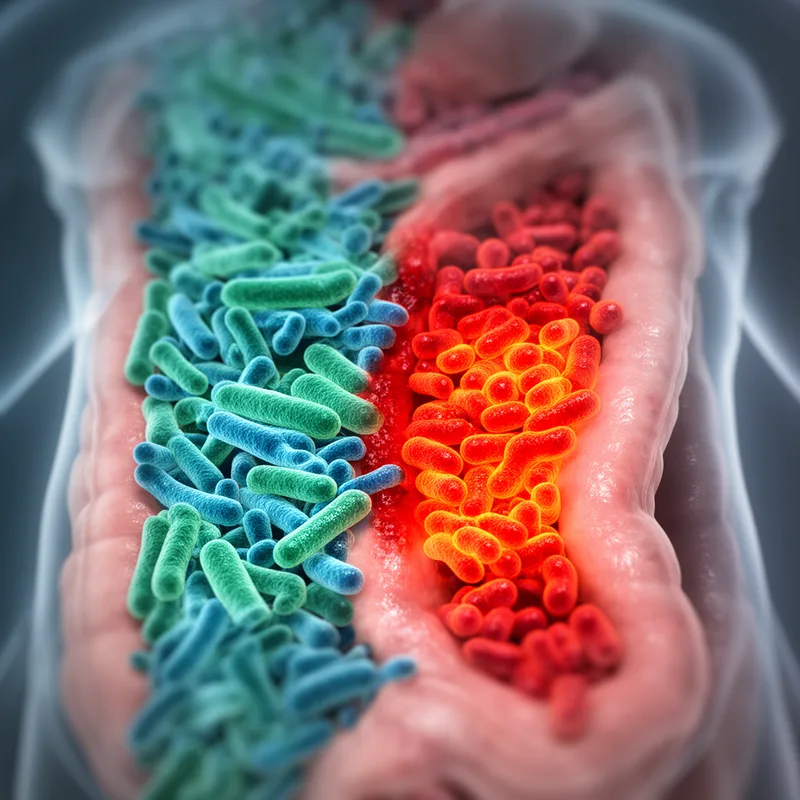
family Bacteroidaceae
- noun
- /ˈfæmɪli ˌbæktəˈrɔɪdəˌsi/
- Specialized
- The family Bacteroidaceae plays a significant role in the gut microbiome of mammals.
Examples
-
Some species belonging to the family Bacteroidaceae can cause infections under certain conditions.
-
Researchers studied the antibiotic resistance patterns within the family Bacteroidaceae.
-
The family Bacteroidaceae plays a crucial role in digestion.
-
Many species from the family Bacteroidaceae are found in the gut.
-
Some species belonging to the family Bacteroidaceae can cause infections under certain conditions.
-
Researchers studied the antibiotic resistance patterns within the family Bacteroidaceae.
-
The family Bacteroidaceae plays a significant role in the gut microbiome of mammals.
Synonyms

A group of bacteria that live in the gut of warm-blooded animals and sometimes cause infections
Surface Forms
Morphology
This is a straightforward taxonomic noun phrase: 'family' (a scientific grouping) combined with the proper taxon name 'Bacteroidaceae' yields 'the family called Bacteroidaceae'. There is no idiomatic or metaphorical shift, and the compositional pattern is standard in biological nomenclature (and similar across languages), so a learner who knows both constituents would understand the meaning.
Etymology
Family Bacteroidaceae comes from the word bacteroid, which means 'small rod', because these bacteria often look like tiny rods under a microscope. That's why 'family' names a group of related bacteria that commonly live in the gut.

