
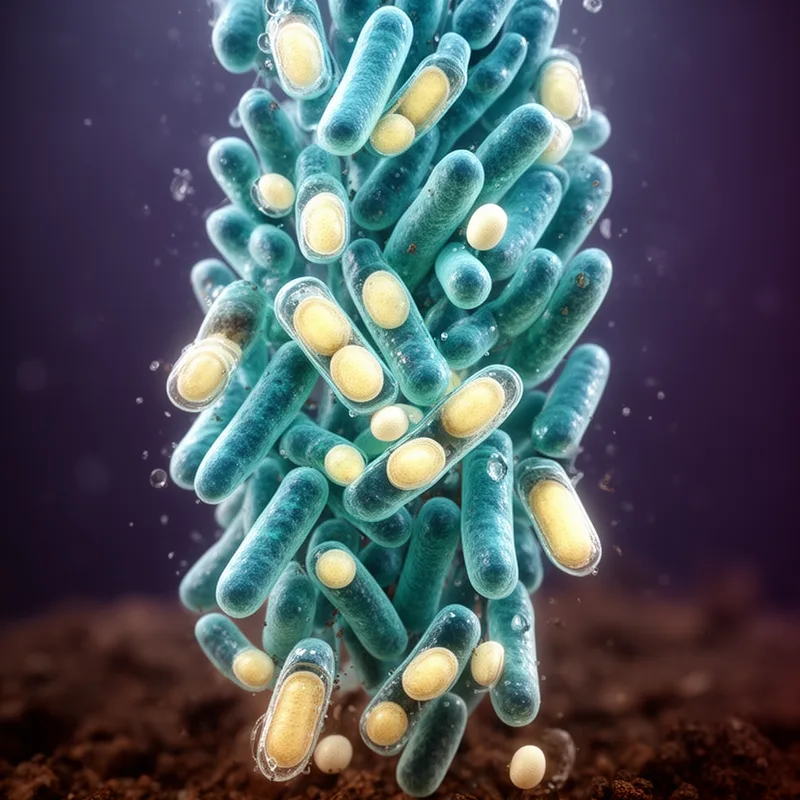
family Bacillaceae
- noun
- /ˈfæmɪli bæsɪˈleɪsiˌi/
- Specialized
- Many species within the family Bacillaceae are known for forming resilient endospores.
Examples
-
Members of the family Bacillaceae are found in soil and water environments worldwide.
-
The laboratory identified the bacteria as belonging to the family Bacillaceae.
-
The family Bacillaceae includes many important bacteria.
-
Several species from the family Bacillaceae are known for their endospore production.
-
Many species within the family Bacillaceae are known for forming resilient endospores.
-
The laboratory identified the bacteria as belonging to the family Bacillaceae.
-
Members of the family Bacillaceae are found in soil and water environments worldwide.
Synonyms

A family of bacteria shaped like rods that often form spores and survive tough conditions
Surface Forms
Morphology
The phrase is directly compositional: 'family' denotes a taxonomic grouping and 'Bacillaceae' names the taxon, so a learner who knows both words can infer it means a family (group) of Bacillaceae bacteria. This follows standard noun+name taxonomy patterns common across languages, so despite the technicality of the taxon name the overall meaning is recoverable from the constituents.
Etymology
Family Bacillaceae gets its name from the word Bacillus, which comes from a Latin word meaning 'small stick' or 'rod'. That picture of tiny rods fits these bacteria, because they are rod-shaped and often make tough 'endospores' to survive.

