
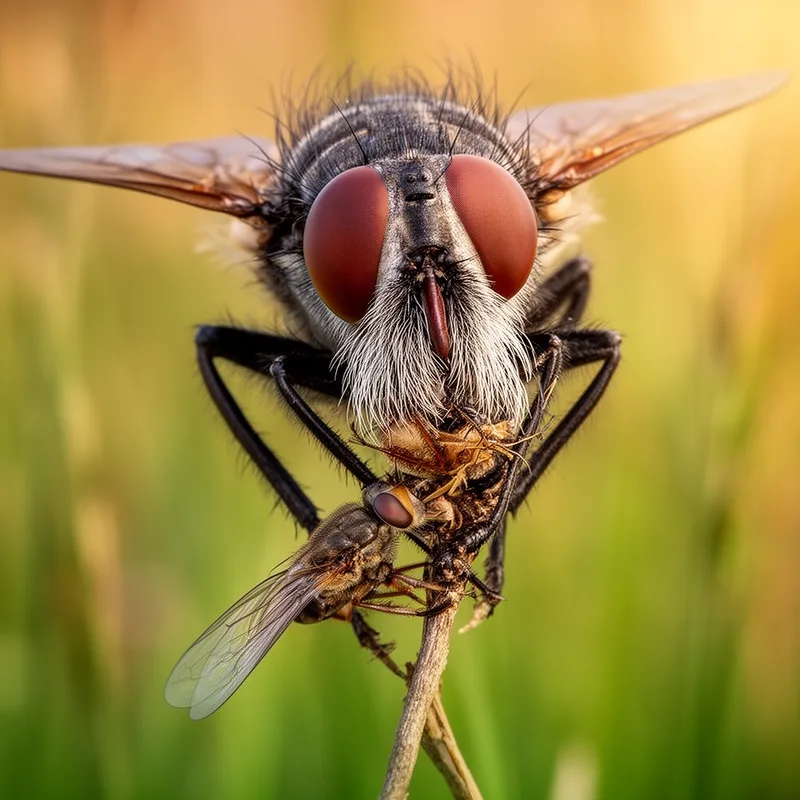
family Asilidae


 1
9.9
- noun
- /ˈfæmɪli əˈsɪləˌdeɪ/
- Specialized
- Members of the family Asilidae are known for their aggressive hunting behavior towards other insects.
Examples
-
The distinctive bristly face of the family Asilidae helps protect their eyes during prey capture.
-
Biologists discovered a new species within the family Asilidae in South America.
-
The family Asilidae includes many species of predatory flies.
-
I spotted a family Asilidae while hiking in the forest.
-
Robber flies from the family Asilidae are known for their aggressive hunting techniques.
-
Entomologists study the family Asilidae to learn more about their predatory behavior.
-
The family Asilidae includes many species that are beneficial for controlling pest populations.
Synonyms
 1
9.9
A family of strong, hairy flies that hunt and eat other insects, often called robber flies
Surface Forms
Morphology
The phrase is a straightforward taxonomic compound: 'family' (a scientific grouping) combined with the name 'Asilidae' (the robber-fly group). This composition is fully compositional and cross-linguistically common, so a learner who knows both constituents can infer it refers to the biological family containing those predatory flies.
Etymology
Family Asilidae names a group of strong hunting flies often called 'robber flies' because they grab other insects like little thieves. Their strong bodies and bristly faces help protect their eyes when they catch prey, so the name now refers to these large, aggressive hunting flies.