
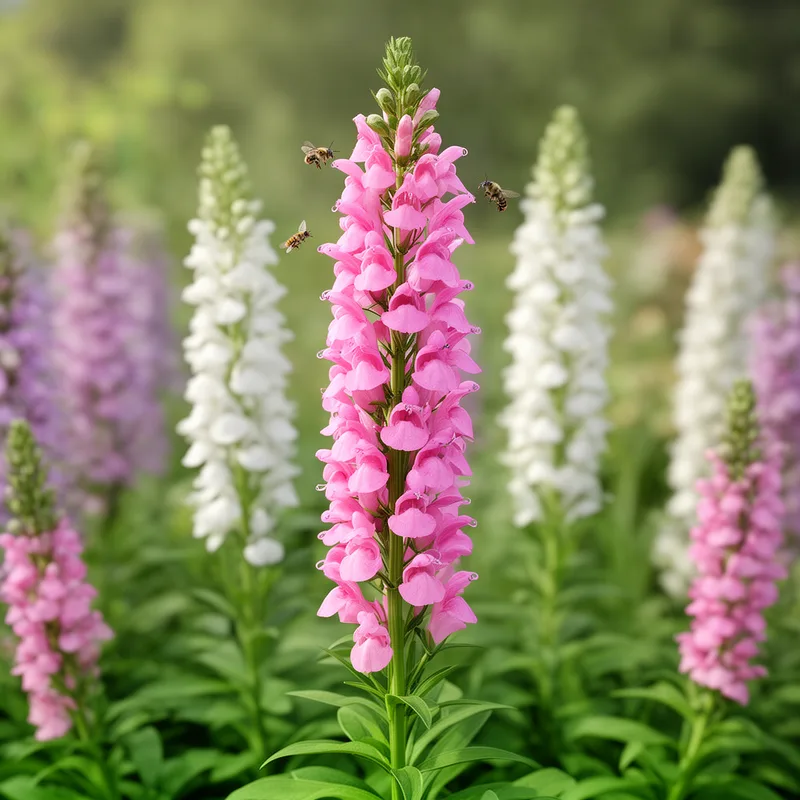
false dragonhead
- noun
- Specialized
- The two-lipped flowers of the false dragonhead attract bees and butterflies.
Examples
-
The false dragonhead adds vibrant color to summer gardens with its pink blossoms.
-
Gardeners often plant false dragonhead alongside other perennials for their long blooming period.
-
The false dragonhead blooms beautifully in the summer.
-
I planted several false dragonheads in my garden.
-
The garden was vibrant with colors, including the lovely false dragonhead that attracted many butterflies.
-
In the summer, the false dragonhead blooms with beautiful pink flowers, adding charm to any landscape.
-
She planted false dragonhead in her flower beds to create a stunning display for her backyard garden.
Synonyms

A North American plant in the mint family with two-lipped pink or white flowers in a spike

A North American garden plant with tall spikes of pink or white flowers

A garden plant that lives for several years with spikes of pink or white flowers

A plant with narrow leaves and tall spikes of white, pink, or lavender flowers
Surface Forms
Morphology
The meaning is directly compositional: 'false' (not genuine or imitation) combined with the plant name 'dragonhead' yields a plant that resembles or is mistaken for true dragonhead. The 'false + noun' pattern to indicate a look‑alike is a regular, cross‑linguistic morphological pattern, so a B1 learner who knows the constituents would readily infer the sense.
Etymology
False dragonhead may come from the flower's shape: the two-lipped blooms look like a small dragon's head, but the plant is not the 'true' dragonhead. That's why the name uses false to show it is not the real one, while dragonhead points to the head-shaped flowers.

