
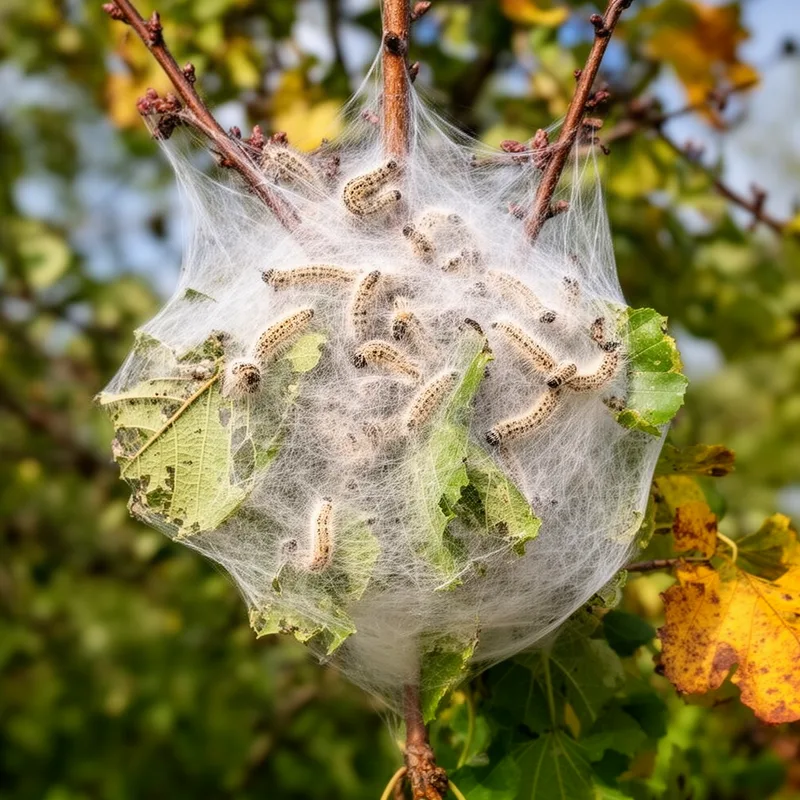
fall webworm
- noun
- /fɔl wɛbˌwɜrm/
- Specialized
- The fall webworm is often seen covering tree branches with its distinctive webs in late summer.
Examples
-
If left untreated, a fall webworm infestation can cause significant damage to ornamental trees.
-
Many homeowners struggle to control infestations of the fall webworm in their gardens each year.
-
The fall webworm is known for its destructive feeding habits.
-
Many trees are affected by the fall webworm this season.
-
If left untreated, a fall webworm infestation can cause significant damage to ornamental trees.
-
Many homeowners struggle to control infestations of the fall webworm in their gardens each year.
-
The fall webworm is often seen covering tree branches with its distinctive webs in late summer.
Synonyms
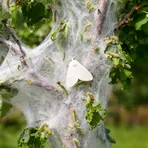
A moth whose caterpillars make silky webs on tree branches
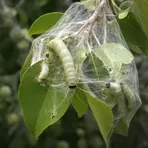
A caterpillar that spins silk webs over leaves while eating them
Surface Forms
Morphology
The noun-noun compound combines 'fall' (the autumn season) with 'webworm' (a caterpillar that makes webs), so the basic meaning ‘a webworm that appears in fall’ is directly and predictably derivable from the parts. This follows normal English compounding patterns (season + animal) and would be understandable to a B1 learner who knows both constituents, even if they might not know all species-specific details.
Etymology
Fall webworm is named for a simple image: groups of small caterpillars spin big silk webs over tree branches in the fall. Because these worms are really caterpillars that appear in the fall and cover trees with webs, the name tells you what the insect looks like and what it does.

