

fagot stitch
- noun
- UK
- The seamstress used a fagot stitch to create a delicate border on the dress sleeves.
Examples
-
You can enhance table linens by joining panels with a fagot stitch for an elegant, lacy effect.
-
Learning the fagot stitch is essential for anyone interested in traditional embroidery techniques.
-
She used a fagot stitch to join the two fabrics.
-
The fagot stitch adds a beautiful detail to the embroidery.
-
The seamstress used a fagot stitch to create a delicate border on the dress sleeves.
-
You can enhance table linens by joining panels with a fagot stitch for an elegant, lacy effect.
-
Learning the fagot stitch is essential for anyone interested in traditional embroidery techniques.
Synonyms
 23
2.3
23
2.3

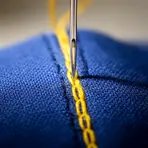
The action of joining cloth pieces with a needle and thread

 1
8.0
1
8.0
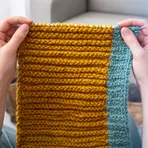
A pattern made by knitting every row to make raised lines across the fabric

A decorative sewing method that joins rows of threads or fabric edges in an open pattern

A decorative stitch that ties groups of threads to make an open pattern
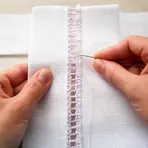
A decorative stitch that joins fabric edges with open lace-like bands

A single stitch made with a needle and thread to decorate cloth
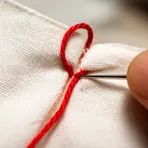
A single pass of thread through cloth to hold pieces of cloth together

A row of small sewn loops that finish and strengthen fabric edges around buttonholes

A row of thread that a sewing machine makes to join pieces of fabric
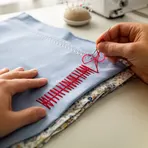
A long loose temporary stitch that holds fabric layers before final sewing
How Decorative

Surface Forms
Morphology
The phrase names a type of stitch formed by combining a descriptor ('fagot' — to join fabric edges with openwork) with the head noun 'stitch', so its meaning (‘a stitch used for fagoting/joining with openwork’) is directly derivable from the constituents. Although the term is specialized jargon, the noun-noun/descriptor+stitch composition is a regular, productive pattern in English and would be understandable to a B1 learner who knows both constituent meanings.
Etymology
The sewing term fagot stitch may come from the old word fagot, meaning a small bundle of sticks. Because the stitch ties small groups of threads together to join two pieces of fabric, the image of 'tying a bundle' helps explain why the name now means this decorative way to join fabric.