
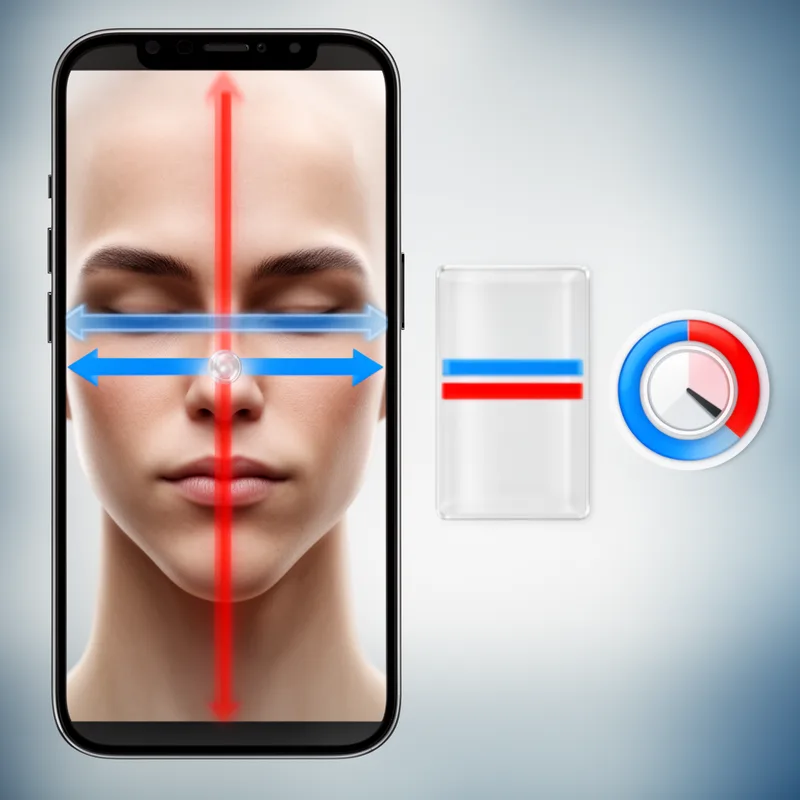
facial index
- noun
- /ˈfeɪʃəl ˈɪndɛks/
- Specialized
- A lower facial index indicates a longer, narrower face.
Examples
-
Anthropologists often use the facial index to classify skull shapes.
-
The doctor calculated the facial index from the patient's measurements.
-
The facial index is crucial for anthropometric studies.
-
Researchers measure the facial index to determine ethnic traits.
-
The doctor calculated the facial index from the patient's measurements.
-
Anthropologists often use the facial index to classify skull shapes.
-
Researchers measure the facial index to determine ethnic traits.
How Wide


Surface Forms
Morphology
The compound combines 'facial' (pertaining to the face) with 'index' (a numeric indicator), so a B1 learner who knows both words can infer it is a numerical measure relating to the face — likely something about facial proportions. However, the exact technical meaning (the specific ratio of maximum width to maximum height expressed as a percentage) is not directly derivable from the constituents without domain knowledge, making it only partially transparent.
Etymology
Facial index comes from old measuring work: facial means the face and index means a single number that shows how two sizes compare. It is the number made by comparing the face 'width' with the face 'height', so it tells you if a face is wide or long.