
extremely low frequency
 1
6.8
1
6.8

- noun
- /ɪkˈstrimli loʊ ˈfrɛkənsi/
- Specialized
- The National Institute of Environmental Health Sciences and the U.S. Department of Energy (1999), however, concluded that extremely low frequency (ELF) EMF exposure cannot be recognized at this time as entirely safe because there is weak scientific evidence that exposure may pose a leukemia hazard.
- extremely low frequency fields
- extremely low frequency radiation
- extremely low frequency electromagnetic
Examples
-
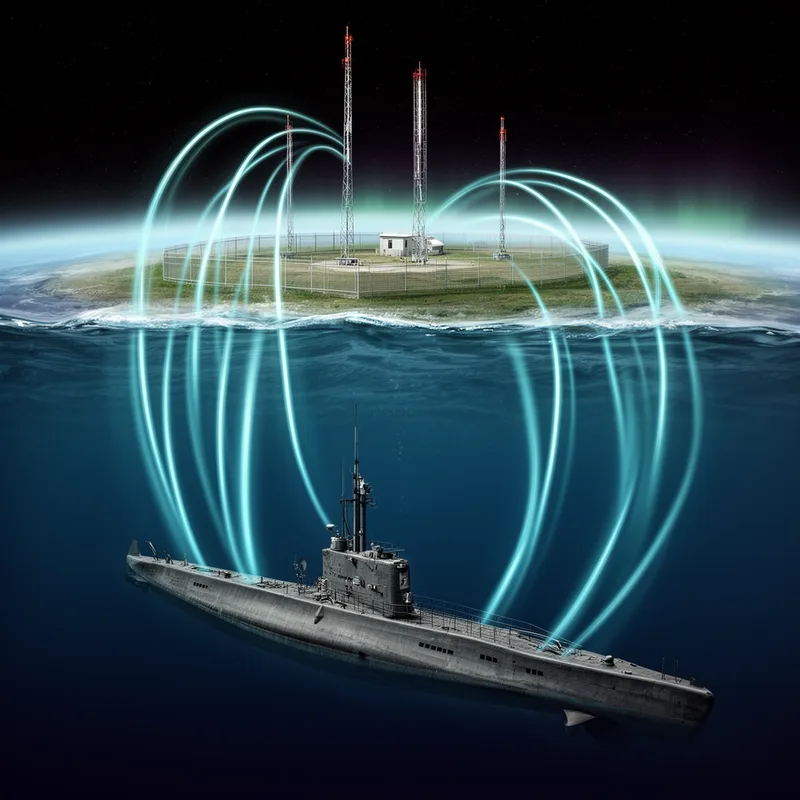
The researchers analyzed extremely low frequency electromagnetic waves used in submarine communications to penetrate ocean water.
-
Many studies on extremely low frequency noise have revealed its impact on human health and wildlife behavior.
-
We're talking extremely low frequency radiation, sucking the Agent Orange out of the cells.
-
Direct measurements of extremely low frequency magnetic fields in the workplace might provide further information.
Academic text (2010) -
This outcome seems highly unlikely since it would have entailed the creation of a new series of phonemes with an extremely low frequency of occurrence.
Academic text (2000) -
Extremely low frequency electric and magnetic fields (EMFs) are produced by power lines, electrical wiring, and electrical equipment.
Academic text (2002) -
The possibility of extremely low frequency electromagnetic fields (ELF EMF) causing a number of medical conditions and common symptoms remains a concern and presents somewhat of a quandary to health educators in view of conflicting results.
Academic text (2008) -
Scientists often utilize extremely low frequency signals to study the Earth's magnetic field and atmospheric phenomena.
Synonyms
 7
9.9
7
9.9
Radio waves with very low frequency below 3 kilohertz
How High
- Specialized

 1
4.5
1
4.5

- Specialized
1
3.7
- Specialized
1
4.6
- Specialized
- Specialized
2
4.9
- Specialized
1
6.8
Surface Forms
Morphology
The meaning is directly compositional: 'extremely' (very) + 'low' (small in amount) + 'frequency' (rate) yields 'a very low rate/ frequency', so a learner who knows the parts can infer it. The specific technical cutoff (below 3 kHz) is domain knowledge but not required to understand the basic sense, and the construction is cross-linguistically regular.
Etymology
Extremely low frequency shows waves that are extremely low in frequency — imagine very long sea waves or a very slow heartbeat that only moves up and down a few times each second. So, it is the name for radio waves that change very slowly and can travel long distances, even through water to reach submarines.