
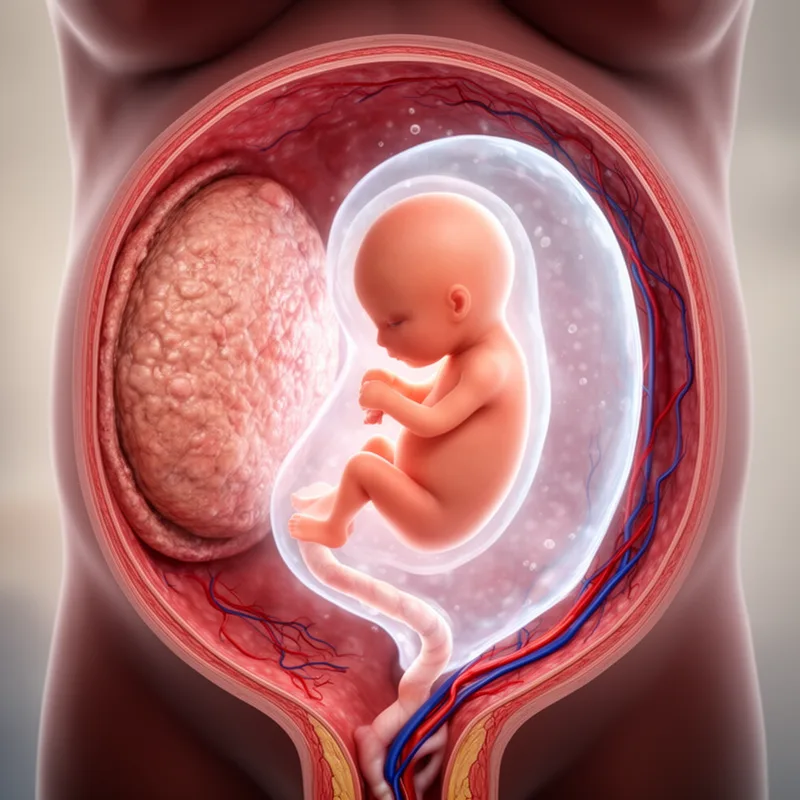
extraembryonic


 1
8.7
- adjective
- /ˌɛkstrəɛmˈbrɪənɪk/
- Specialized
- During early development, the placenta is an extraembryonic tissue that plays a crucial role in fetal nourishment.
Examples
-
The yolk sac is an important extraembryonic structure that provides nutrients to the developing embryo.
-
Second, the zygote gives rise to further divisions, resulting in an aggregate of cells, each of which remains equivalent to a zygote in the sense that it can become all or any part of an embryo and its extraembryonic structure.
Academic text (1990) -
Vitellointestinal duct or omphalomesenteric duct joins the midgut with the extraembryonic part of the yolk sac.
Academic text (2007) -
In mammals, various extraembryonic membranes form that protect and support the growing embryo.
How External
- Specialized
1
8.7

- Specialized
37
7.0
Surface Forms
Morphology
Etymology
Extraembryonic comes from the part extra-, like the common word extra, meaning 'outside', and embryo meaning 'the early form of a baby'. So extraembryonic describes parts that form 'outside the embryo' and help it grow.