

extant
 11
8.6
11
8.6

- adjective
- /ˈɛkstənt/
- Researchers are focusing on extant species to study evolutionary processes.
- extant literature
- extant research
- extant species
Loading YouTube…
Watch on YouTubeParticular concrete applications that are either extant now or foreseeable in the future.
- Particular concrete applications that are either extant now or foreseeable in the future.
- Many of the features that we that we attribute to enlightenment thinkers, which I can barely even talk about today or extant throughout this.
Examples
-
The library houses an extant collection of first editions from the 19th century.
-
Data abstracted from extant burial and baptismal registers and censuses are analyzed using inverse projection.
Academic text (1992) -
The fundamental rights we view as extant in the context of international law are an example.
Academic text (1999) -
Regarding the data, variables were limited to what was available in the extant data set.
Academic text (2011) -
Do they want to integrate China into the extant world system?
Academic text (1999) -
To conduct the data analysis, we requested extant data from the Oregon Department of Education.
Academic text (2011) -
Evaluate any treatment procedure for autism on the basis of extant, controlled scientific evidence supporting its efficacy.
Academic text (1999) -
Second, for rangewide species conservation, extant suitable or potentially suitable habitat must be defined.
Academic text (2011) -
Digital photographs were taken of all extant objects and ethnographic documents from the missionary archives.
Academic text (2008) -
For social history, the richest lodes of information are those extant inventories collected from 1850 to 1920.
Academic text (1993)
Synonyms


Antonyms
Surface Forms
Etymology
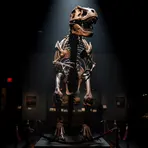
Extant comes from the Latin parts ex- 'out' and stare 'to stand', so it literally suggests 'standing out' or 'still standing'. Think of an old book or building that is still standing today, and you will remember that extant means 'still in existence'.