
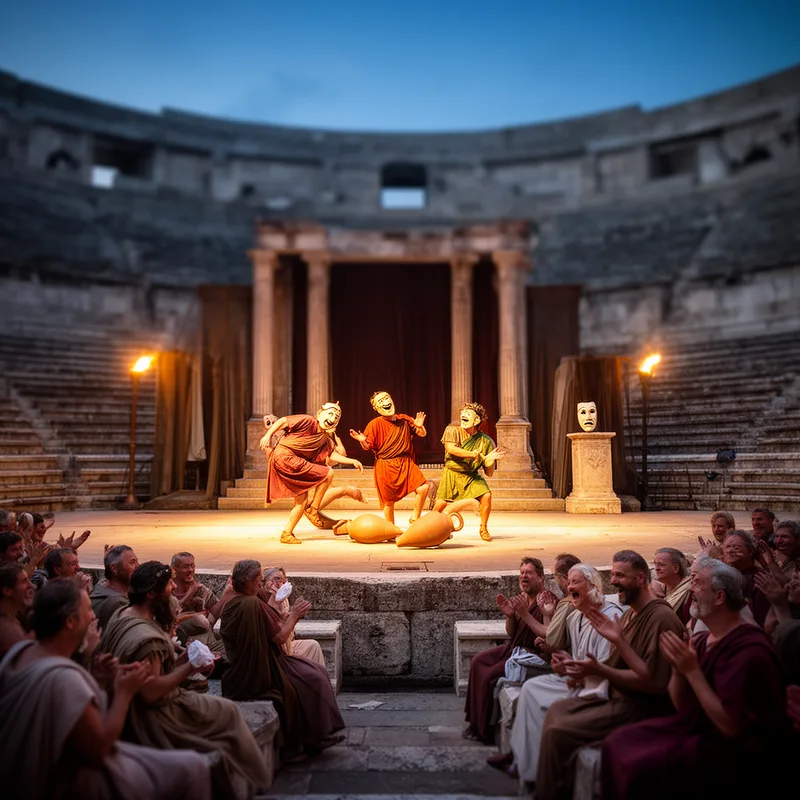
exode
- noun
- /ˈɛksoʊd/
- Archaic
- The final act of the play ended with a hilarious exode.
Examples
-
The troupe concluded their performance with a lively exode that had the audience roaring with laughter.
-
Scholars have uncovered scripts of several ancient exodes that hint at their popularity among Roman audiences.
-
In Roman theater, the exode often provided comic relief after a serious tragedy.
-
Did you enjoy the exode after the main performance?
-
The audience enjoyed the humorous exode that followed the main play.
-
After the serious drama, the cast presented a lively exode to entertain the crowd.
-
In ancient Roman theater, the exode provided comic relief after the main performance.
Synonyms



 1
9.9
A play written to be acted, often from ancient Roman theatre
Surface Forms
Etymology
Exode comes from the Greek word exodus, which means 'way out' or 'exit'. Think of exit and exodus: an exode was a short, often funny piece put on at the end of a Roman show, like a comic 'exit' or send-off, so the origin explains why it follows the main performance.