

executant
- noun
- /ˈɛksɪkjʊənt/
- Specialized
- Best of all the spastic walk of triumph after getting someone out, as if the proud executant were being mildly electrocuted.
Examples
-
" Smiling, she employed the executant of response to inquiry.
Fiction book (1999) -
No, no more arguments, ho!" Caly used the commanding executant sharply.
Fiction book (1999) -
"Food, oh," he said automatically, the executant of response to command.
Fiction book (1999) -
The artist turns into the executant.
Academic text (1999) -
Music develops from the people, the 'folk songs,' and if you do not make the people executants, you make them depend on the machines. "Sousa was right."
Academic text (2010) -
But I wish to see more of the Prime Mondeign before I settle down, huh," using the seldom-employed declarative Executant to indicate her seriousness.
Fiction book (1999) -
The growing field of patronage studies has usually rested on some perceived community of interest between commissioner and executant, at least before the nineteenth century: color is one area where this was manifestly not always the case.
Academic text (1990) -
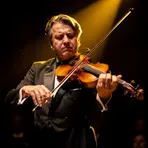
The skilled executant captivated the audience with her beautiful piano performance.
-
Every executant at the concert showcased their unique interpretation of the classic piece.
-
As a talented executant, he brought the painter's vision to life with incredible detail.
Synonyms
 12
8.0
12
8.0

A person with very great skill, often in music or art
 8
7.4
8
7.4
A professional performer, especially a singer or dancer who performs on stage
 5
5.3
5
5.3
A person who plays a musical instrument, often as a job
 1
3.4
1
3.4
A person who entertains people by acting, singing, or dancing
How Skilled

Surface Forms
Morphology
Etymology
Executant comes from the same root as execute, made from Latin parts ex- 'out' and sequi 'to follow', which together mean 'to carry out'. So an executant is someone who 'carries out' a musical work, a performer who plays or sings it with skill.