
evapotranspiration


 1
9.5
- noun
- /ˌiːvæpəʊtrænspɪˈreɪʃən/
- Specialized
- Researchers measure evapotranspiration to understand how much water is lost from soil and plants in various climates.
- evapotranspiration and precipitation
- potential evapotranspiration
- evapotranspiration and moisture
Examples
-
Lower temperatures in the other months cause less evapotranspiration, which leads to less extreme soil drying.
Academic text (1998) -
All studies agree that South America and Africa have more evapotranspiration per unit of land area than the other continents.
Academic text (1992) -
Average annual evapotranspiration for all land areas is nearly half that from South America.
Academic text (1992) -
For other land areas, however, no general agreement on evapotranspiration exists.
Academic text (1992) -
Asia has the lowest evapotranspiration rate according to two studies, Europe according to three, and Australia in two.
Academic text (1992) -
During those months, rainfall is insufficient to offset water losses to evapotranspiration.
Academic text (1998) -
In these low-elevation areas, forest loss will reduce evapotranspiration rates, potentially rendering these areas too wet to support trees.
Academic text (2016) -
In North Africa, for instance, evapotranspiration would increase by 10% for each temperature increase of 1.5°C.
Academic text (1993) -
On more local scales, urban expansion generates heat islands from concrete surfaces and reduces evapotranspiration.
Academic text (2006) -
Terrestrial vegetation plays a crucial role in the water cycle. It modulates and sustains evapotranspiration and precipitation.
Academic text (2010)
Surface Forms
Morphology
evapotranspiration = evaporation + transpiration (transparent) = evapo + transpiration
Formed by fusing a truncated form of 'evaporation' ('evapo-') with 'transpiration'; the meaning is the sum of the two processes.
Etymology
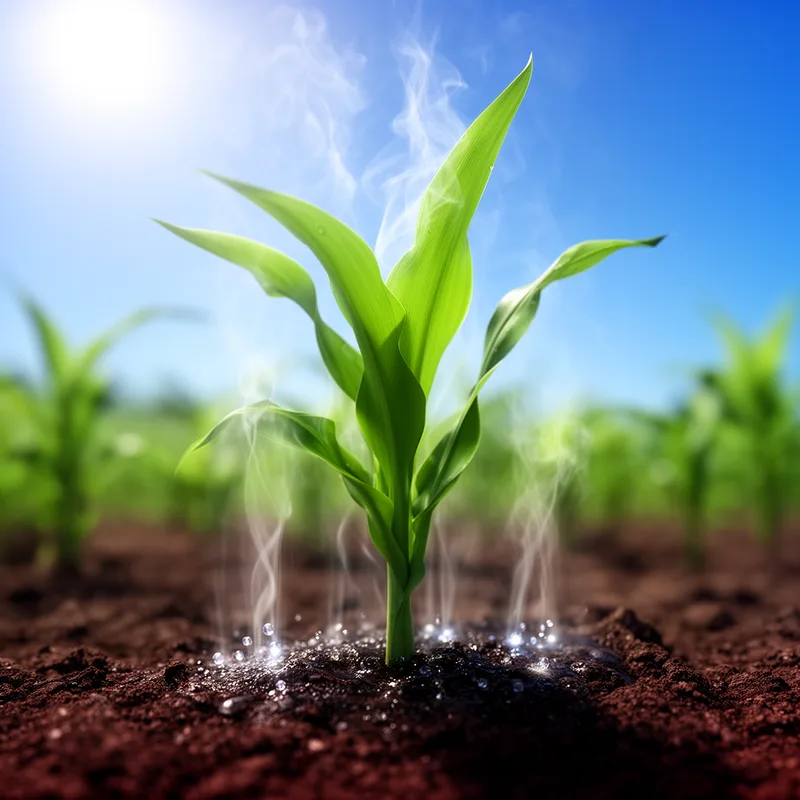
The word evapotranspiration combines evaporate, which means 'to turn water into vapor', and transpiration, which is plants 'breathing' water out into the air. So evapotranspiration is the total water that moves from land into the air by both evaporation and plants releasing water.