
ethnolinguistic


 1
8.4
- adjective
- /ˌɛθnoʊlɪŋˈɡwɪstɪk/
- Specialized
- Over time, individual human populations may divide into new ethnolinguistic groups.
- ethnolinguistic vitality
- ethnolinguistic group
- dimensions of ethnolinguistic
Examples
-
Since the mid-1960s, there has been a worldwide resurgence of ethnic identities among ethnolinguistic minority groups.
Academic text (1996) -
Many major subgroupings and minor ethnolinguistic groups are largely concentrated in the mountainous north of the country.
Academic text (2005) -
Members' expectations of the ethnolinguistic vitality of their own ethnic or cultural groups.
Academic text (1997) -
In the present study, we first determined the relevant dimensions of ethnolinguistic vitality in the South African context.
Academic text (1997) -
The expectations of groups differed significantly regarding the dimensions of ethnolinguistic vitality.
Academic text (1997) -
Of all three groups, the Afrikaans-speaking Whites evaluated their ethnolinguistic vitality the lowest for all five dimensions identified in the present study.
Academic text (1997) -
The possibility of group mobilization is even greater if low ethnolinguistic vitality is perceived as a threat (Grant, 1992, 1993).
Academic text (1997) -
Ethnolinguistic analyses demonstrate that the Wendat language refers to both spiritual and nonspiritual streams.
Academic text (2017) -
The United Front (UF), an alliance representing an embryonic Bengali ethnolinguistic movement, won an overwhelming victory and formed the government.
Academic text (2004) -
The study focused on the relationship between language and cultural identity in various ethnolinguistic communities.
Surface Forms
Morphology
ethnolinguistic = linguistic (semi-transparent) = ethno + linguistic
The combination of 'ethno-' (people) and 'linguistic' (relating to language) is conceptually regular, but 'ethno-' is a bound, specialized combining form and the whole word is academic, so it may not be immediately transparent to average learners.
Etymology
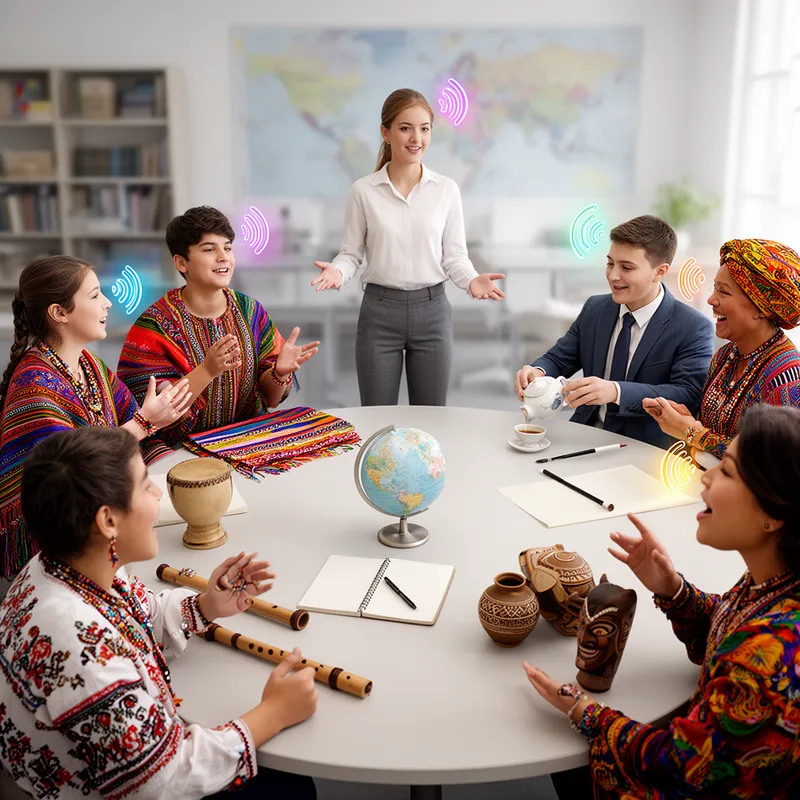
The word ethnolinguistic joins ethno-, like in ethnic, meaning 'people', and linguistic, like language, meaning 'language', so it describes groups that share both a language and a cultural identity.