
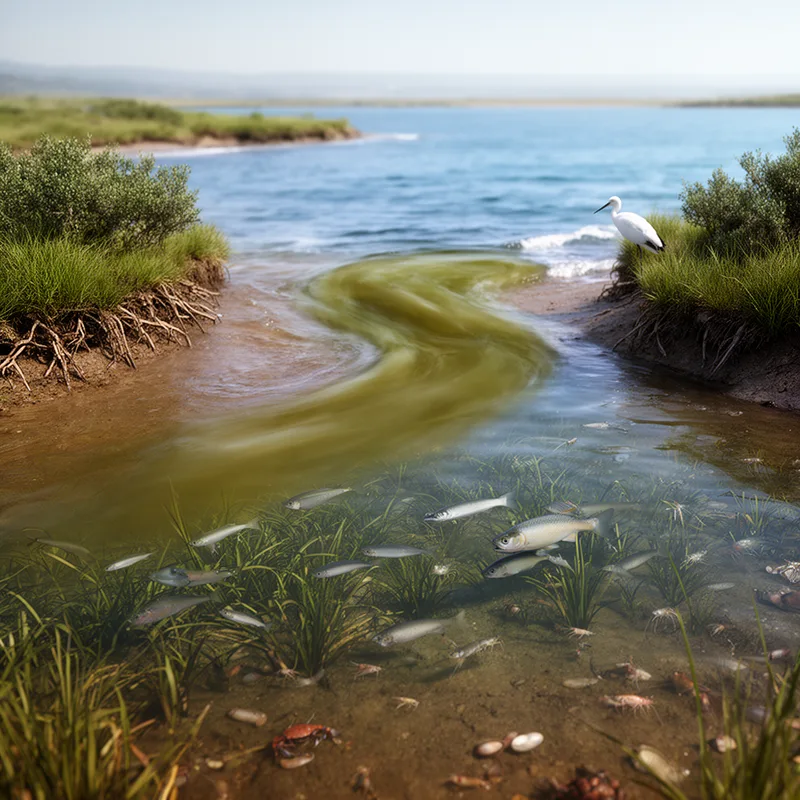
estuarial


 1
8.2
- adjective
- /ˌɛstʃuˈɛriəl/
- Specialized
- Scientists study the estuarial conditions to understand their impact on marine life.
Examples
-
Taking the focus off what most humans are doing and saying about each other, I bring attention to an issue outside system logic and public discourse: the potentially negative impact of the built environment on biodiverse estuarial habitat.
Academic text (2016) -
When added together as the sum of two distinct realms, the technozones tend to erase maritime ecology, breaking biological links between animals and plants in estuarial spaces.
Academic text (2016) -
The once vibrant quayside market in what was a polluted estuarial zone has become a transitioning subsystem of the island's freshwater reservoir and an upscale international recreation zone.
Academic text (2016) -
The estuarial waters are teeming with unique fish and plant species.
-
Many migratory birds nest in the estuarial regions along the coast.
Synonyms
 1
8.6
Relating to the area where a river meets the sea and fresh and salt water mix
Surface Forms
Morphology
Etymology
Estuarial comes from estuary, which goes back to the Latin aestuarium and aestus, meaning 'tide' or 'surge'. So estuarial describes places or waters where the sea tide meets a river, and the plants and animals that live there.