
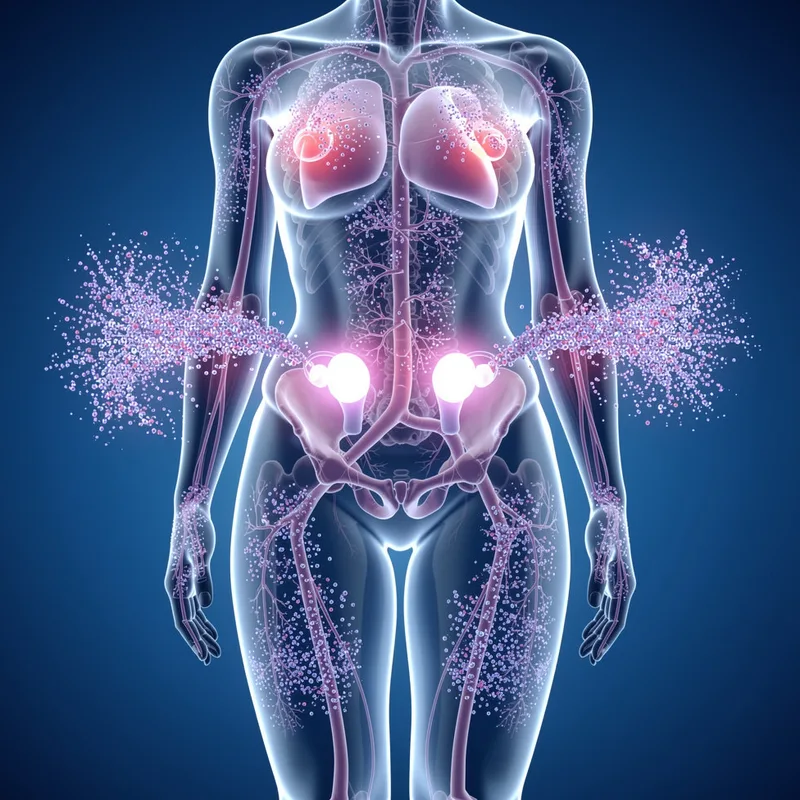
estrogen
 89
4.0
89
4.0

- noun
- /ˈɛstrədʒən/
- Specialized
- However, during menopause, reduced estrogen levels cause an increased rate of loss of calcium from the skeleton.
- estrogen levels
- estrogen receptor
- estrogen therapy
Loading YouTube…
Watch on YouTubeThey don't actually contain real estrogen or real progesterone.
- They don't actually contain real estrogen or real progesterone.
- A high fiber diet flushes these estrogens away quite literally.
- 'Cause remember those women got estrogen only versus placebo.
- Supplements with the estrogen led to strokes and heart attacks.
- It's causing issues with your estrogen to testosterone ratios.
- So that's due to estrogen being missing from the cartilage.
- So DHEA can convert to both testosterone and estrogen, which it does quite often.
- It's just the oestrogen depletion in your body.
- And then the estrogen that's not used gets transported.
- So when we're going through menopause, we are getting less estrogen and less progesterone.
- Do they have what would look like potentially more estrogen in a male?
- Now, part of that can be due to estrogen dropping as well as testosterone.
- So start us, explain the blue spot, and then help us understand estrogen's role in all of this.
- And so getting that daily message, high progesterone, progestin, low estrogen, shuts that process down.
- But nonetheless, it is estrogen that is the final step.
- You're really catering to estrogen and estrogen likes glucose to be low.
Examples
-
I'm at an age where my doctor talks to me about estrogen for preventing bone loss.
Fiction book (1996) -
So it turns out that estrogen is better at prevention than cure.
-
But nonetheless, it is estrogen that is the final step.
-
Estrogen level's been low these days.
-
Current exposure was defined as a prescription for replacement estrogen within the previous 6 months.
Academic text (1999) -
I read online that chickpeas are high in natural estrogen.
-
So when we're going through menopause, we are getting less estrogen and less progesterone.
-
The menopause results from significant hormonal changes with a marked reduction in estrogen production.
Academic text (2012) -
A principal benefit is that estrogen helps to prevent bone deterioration and susceptibility to breaks.
Academic text (1990) -
During menopause, many women experience symptoms due to a decrease in estrogen levels.
Compounds

- Specialized
A medicine that stops estrogen from working used to treat some breast cancers
Surface Forms
Morphology
estrogen = estrus (opaque) = estro + gen
The modern word is built from technical combining forms (e.g., 'estro-' related to estrus + '-gen' meaning 'producer'), which are not transparent to average B1 learners.
Etymology
Estrogen comes from Greek parts: oistros meaning 'frenzy' or strong sexual desire and -gen meaning 'to produce', just like in generate. So estrogen is a substance that 'produces' the changes of the female body, which explains its role in female sexual development.