
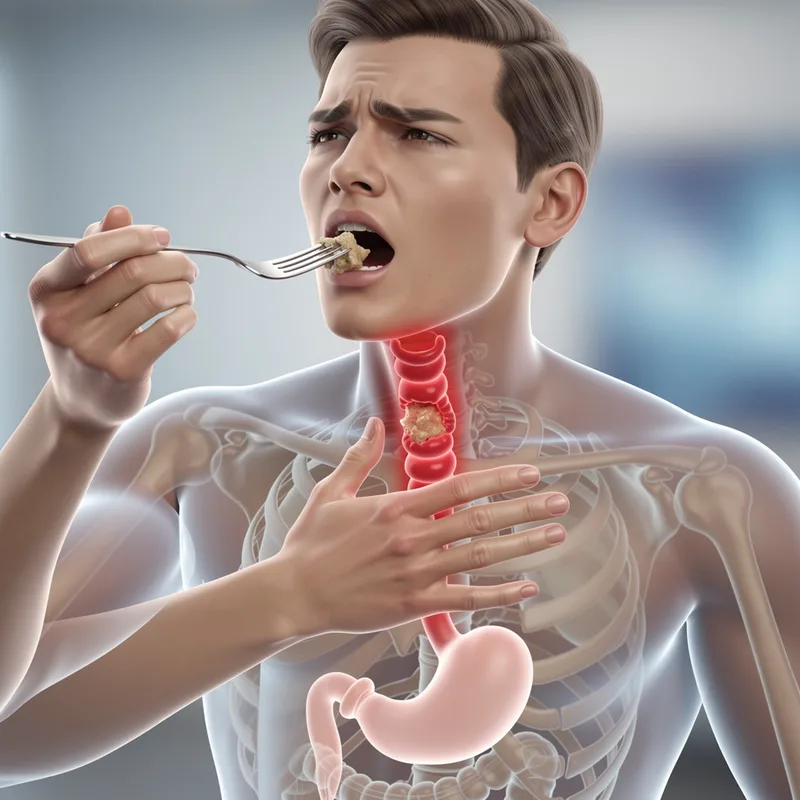
esophagitis
 1
8.1
1
8.1

- noun
- /ɪˌsɑfəˈdʒaɪtɪs/
- Specialized
- Biopsy analysis of the esophageal mucosa specimen reveals a high number of eosinophils/hpf (arrows), a finding consistent with eosinophilic esophagitis (H&E; original magnification x 200).
- eosinophilic esophagitis
- esophagitis in adults
Loading YouTube…
Watch on YouTubeThere are conditions, Quick example is eosinophilic esophagitis.
- There are conditions, Quick example is eosinophilic esophagitis.
Examples
-
However, the pathologic features intrinsic in eosinophilic esophagitis do not respond to acid-suppression treatment.
Academic text (2009) -
Most LPR patients do not have esophagitis, which is the diagnostic sine qua non of GERD.
Academic text (2002) -
Eosinophilic esophagitis is an increasingly recognized disorder in the adult population.
Academic text (2009) -
In 1935, Winkelstein first described peptic esophagitis in adults.
Academic text (2002) -
Do patients with LPR require esophageal screening for esophagitis and other complications?
Academic text (2002) -
But the reason LPR patients were upright refluxers without heartburn or esophagitis was still unknown.
Academic text (2002) -
Biopsies taken of the distal esophageal mucosa during the endoscopy did not reveal any eosinophilic esophagitis.
Academic text (2010) -
Esophageal biopsy demonstrated up to 80 eosinophils per high-power field (HPF), a finding that is consistent with eosinophilic esophagitis (Figure 2).
Academic text (2009) -
LPR patients have predominantly upright (daytime) reflux and normal esophageal motility; most do not have esophagitis, which is the diagnostic sine qua non of GERD.
Academic text (2002) -
The doctor explained that his symptoms were due to esophagitis, an inflammation of the esophagus.
How Inflamed

Surface Forms
Morphology
Etymology
Esophagitis comes from esophagus, the 'food tube' that carries food from your mouth to your stomach, and the ending -itis, which means 'inflammation' and appears in common illness names like tonsillitis. So, esophagitis is the 'inflammation' of the esophagus, meaning the food tube is swollen or painful.