
erythropoiesis
- noun
- /ˌɛrɪθroʊpɔɪˈiːsɪs/
- Specialized
- Anemia develops because the lifespan of sickled cells is only 10-12 days, rather than the normal 120 days, and erythropoiesis cannot keep up with the demand for new RBCs.
- increased erythropoiesis
Examples
-
Folic acid supplements may be used to meet the need for increased erythropoiesis.
Academic text (2003) -
However, both drugs interactively altered their individual adverse effects on the haematopoietic system, leading to increased erythropoiesis (Fig. 1).
Academic text (2007) -
The increased RBC count in concurrent administration in the NPEQ- and LPEQ-treated rats (Fig. 1) points to increases in erythropoiesis.
Academic text (2007) -
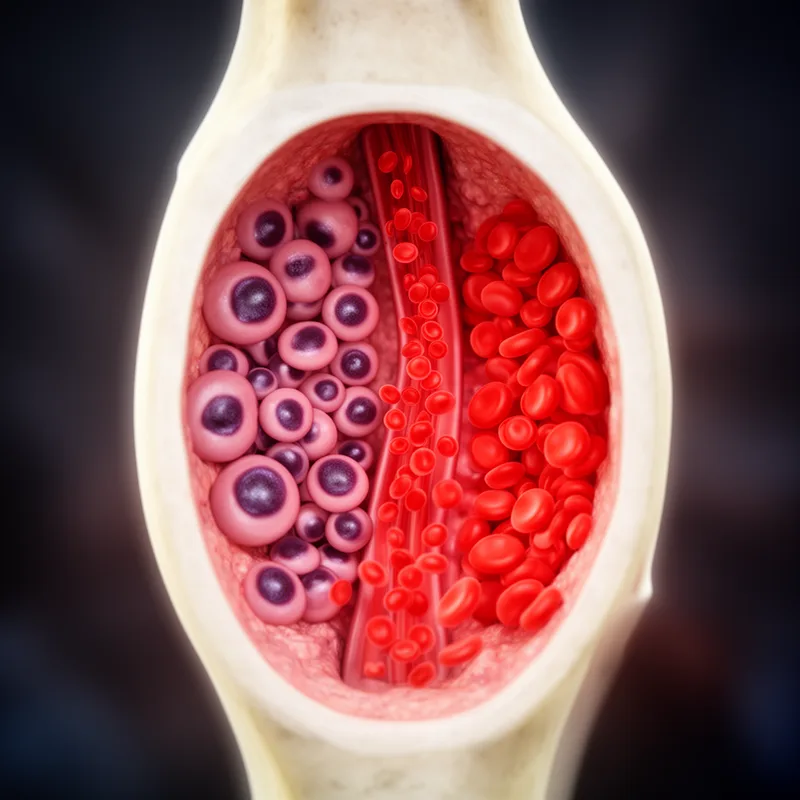
Mammalian erythropoiesis constitutes the entire process by which HSCs in the bone marrow progress through several precursor stages into mature RBCs.
Academic text (2013) -
When the cause, either acquired or genetic, is persistent, long-lasting destruction eventually overwhelms any compensatory erythropoiesis, and then the symptoms become correspondingly more serious and life-threatening.
Academic text (2003) -
The process of erythropoiesis is essential for maintaining healthy levels of red blood cells in the body.
-
The doctor explained that erythropoiesis occurs primarily in the bone marrow, where new red blood cells are formed.
-
Understanding erythropoiesis helps researchers develop better treatments for blood disorders.
Antonyms
Surface Forms
Morphology
erythropoiesis = erythro + poiesis
Formed from specialised Greek combining forms ('erythro-' and '-poiesis') that are not standalone English words, so learners cannot transparently derive the meaning from familiar English bases.
Etymology
The word erythropoiesis comes from Greek parts erythro- meaning 'red' and -poiesis meaning 'making', so it literally means 'making red'. Think of a poet who 'makes' poems, and that is why erythropoiesis is the process that makes red blood cells.

