
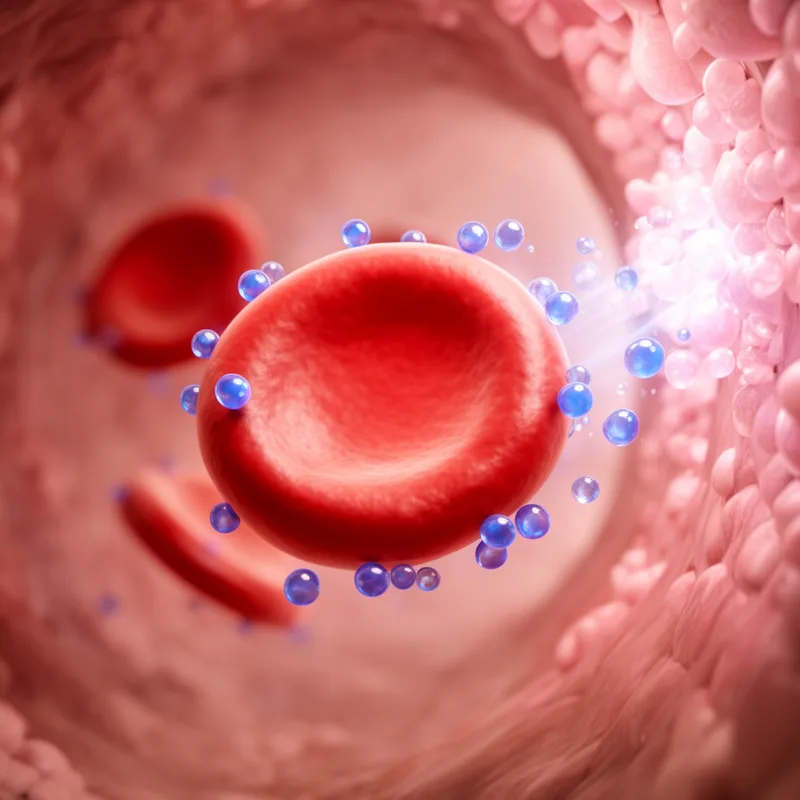
erythrocyte
 2
8.1
2
8.1

- noun
- /ɪˈrɪθrəˌsaɪt/
- Specialized
- The erythrocytes in your blood help to transport oxygen to your organs.
- erythrocyte sedimentation
- erythrocyte sedimentation rate
- erythrocyte count
Examples
-
Premature release of oxygen from erythrocytes causes inactivation of plasma components, disseminated intravascular coagulation, and generalized hypoxia.
Academic text (2017) -
The main factor of anemia in sepsis is increased destruction of erythrocytes by infection.
Academic text (2017) -
In arterial blood, bacteria are attracted by the electric charge of erythrocytes and killed by released oxygen.
Academic text (2017) -
Revealing living bacteria in erythrocytes shows that sepsis is developing to more advanced stages.
Academic text (2017) -
In the bloodstream, bacteria are attracted and fixed on the surface of erythrocytes by electrical charge interaction force.
Academic text (2017) -
The interaction of the charges at the surface of erythrocytes stimulates the release of oxygen from oxyhemoglobin.
Academic text (2017) -
The disease is associated with an elevated erythrocyte sedimentation rate, leukocytosis, neutrophilia, and anemia.
Academic text (1998) -
High concentration of antibacterial drugs in erythrocytes is indispensable for infection elimination.
Academic text (2017) -
Antibiotics and immune complexes cannot kill bacteria inside erythrocytes, and the infection becomes persistent and uncontrollable.
Academic text (2017) -
In patient 8, examination of CSF showed erythrocytes and bilirubin, signs of subarachnoid hemorrhage.
Academic text (1996)
Synonyms
 16
3.1
16
3.1
A small round cell in the blood that carries oxygen to body tissues
 2
3.7
2
3.7
A blood cell that carries oxygen to body tissues
Compounds

- Specialized
The speed at which red blood cells fall to the bottom of a test tube, showing inflammation
How Mature


Surface Forms
Morphology
erythrocyte = erythro + cyte
Built from Greek scientific combining forms ('erythro-' = red, '-cyte' = cell) that are not recognizable to an average B1 learner, so the meaning is not derivable from familiar English base words.
Etymology
Erythrocyte comes from Greek parts erythro- meaning 'red' and -cyte meaning 'cell'. So an erythrocyte is literally a 'red cell', which explains why it means the red blood cell that carries oxygen around the body.