
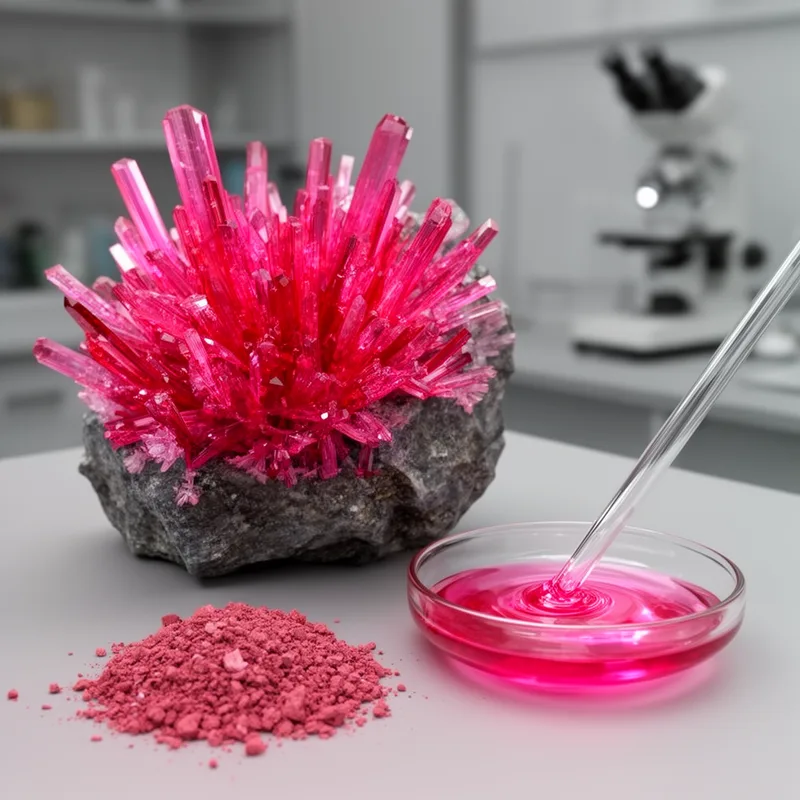
erythrite
- noun
- /ˈɛrɪθraɪt/
- Specialized
- The mineral erythrite, often used to add a distinctive red color to glass and ceramics, is prized by artists for its vivid hue.
Examples
-
Cobalt is a historical silver mining town in northeastern Ontario, Canada, named after the "Cobalt bloom" (i.e., erythrite) that was famously associated with many of the major silver discoveries in the area.
Academic text (2018) -
Collectors seek out erythrite for its vibrant crimson color and unique monoclinic crystal form.
-
In geological studies, erythrite is noted for its attractive red crystals, which can often be found in cobalt-rich deposits.
Synonyms
A reddish mineral people use to make blue glass that is found in mine veins
Surface Forms
Morphology
erythrite = erythro + ite
Formed from the Greek combining form 'erythro-' (red) + mineral suffix '-ite'; these components are specialized combining forms rather than standalone English words, so the composition is not transparent to an average B1 learner.
Etymology
The word erythrite comes from the Greek root erythros, meaning 'red', plus the mineral ending -ite for rocks or minerals. So erythrite is basically a 'red' mineral, which fits its bright pink-red crystals and its use in coloring glass.

