
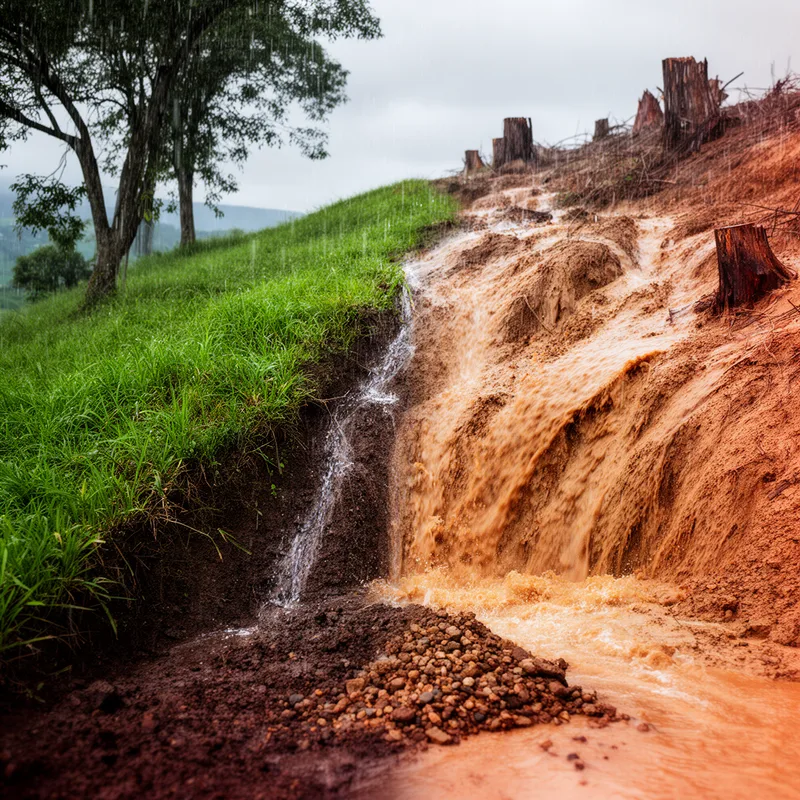
erodibility


 1
8.9
- noun
- /ɪˌroʊdəˈbɪlɪti/
- Specialized
- Research will include two phases: initial lab characterizations and erodibility analysis, followed by field test plot studies that measure erosion, storm runoff quantity, and water quality.
- soil erodibility
Examples
-
The farmer took measures to reduce the erodibility of his land by planting cover crops.
-
The data from these tests will be used to determine erodibility.
Academic text (2003) -
The search for a new set of erodibility values began in 1987 as a cross-country quest.
Academic text (1997) -
Engineered organisms transport materials to abandoned raised fields and modify the structure and composition of their soils, reducing erodibility.
Blog text (2) -
They wanted to determine how electrolytes, which are natural electrical conductors in rainfall and runoff water, could affect estimates of soil erodibility.
Academic text (1997) -
"New technology is incorporated into the model, such as the use of an index—called a headcut erodibility index—to describe the resistance of the exposed geologic materials to erosive attack during the latter stage of the erosion process," says Temple.
Academic text (2000) -
Researchers are studying the erodibility of different soil types to predict how much they will degrade over time.
-
High levels of organic matter in soil can decrease its erodibility, making it less susceptible to erosion.
Antonyms


Surface Forms
Morphology
Etymology
Erodibility comes from the verb erode plus the ending -bility meaning 'ability' or 'quality', and erode goes back to an old root meaning 'to wear away', the same idea in erosion. So, erodibility means how easily soil or other material can be worn away by water or wind.