
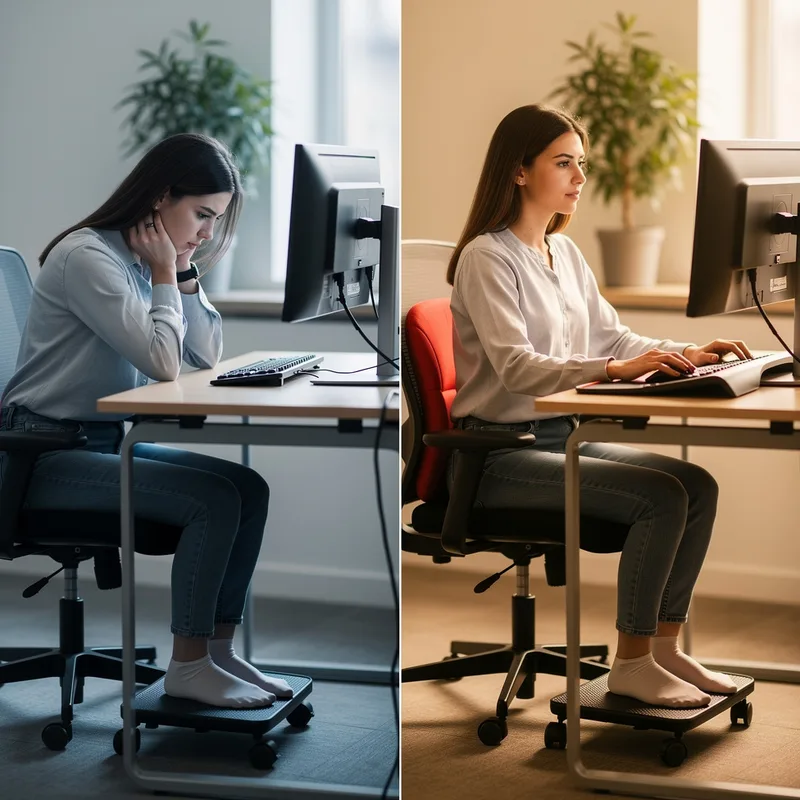
ergonomics
 6
4.7

- noun
- /ˌɜrɡəˈnɑmɪks/
- Specialized
- Improving ergonomics in the workplace can significantly enhance employee productivity and reduce strain.
- workstation ergonomics
- Occupational ergonomics
- ergonomics regulations
Loading YouTube…
Watch on YouTubeAnd he's qualified to teach bio mechanics, ergonomics and back school.
- And he's qualified to teach bio mechanics, ergonomics and back school.
Examples
-
Some major areas addressed by ergonomics include health, safety, comfort, and efficiency (20).
Academic text (1993) -
Workplace design, also called ergonomics, is becoming increasingly important in tools that employees must use all day.
Academic text (2002) -
Consideration should also be given to the ergonomics associated with the handling of boxes and drums.
Academic text (2006) -
In designing a homework station, it helps to think about your own personal ergonomics and the space you have to dedicate.
Academic text (2014) -
And for employees with learning disabilities such as dyslexia, poor workstation ergonomics can be detrimental to productivity and performance.
Academic text (2015) -
The seats are completely redesigned, with improvements in cushioning materials, seat firmness, fabrics, ergonomics, and support.
Academic text (1993) -
Allison A. Stephens, Ford's global technical leader in assembly ergonomics, manages the Ford immersive engineering installation in Dearborn.
Academic text (2011) -
The new office chairs were designed with ergonomics in mind to ensure comfort during long working hours.
-
The engineer focused on the ergonomics of the new tool, making it easier and safer to use for workers.
Surface Forms
Morphology
ergonomics = ergo + nomics
The word 'ergonomics' is derived from Greek roots 'ergo' (work) and 'nomics' (laws), but these roots are not standalone English words, making the word opaque for learners.
Etymology
Ergonomics comes from Greek parts ergon meaning 'work' and nomos meaning 'law' or 'rule'. So it is like the 'rules of work', which helps explain why ergonomics is the study of how to design tools and workplaces to fit the human body and help people work safely and comfortably.