
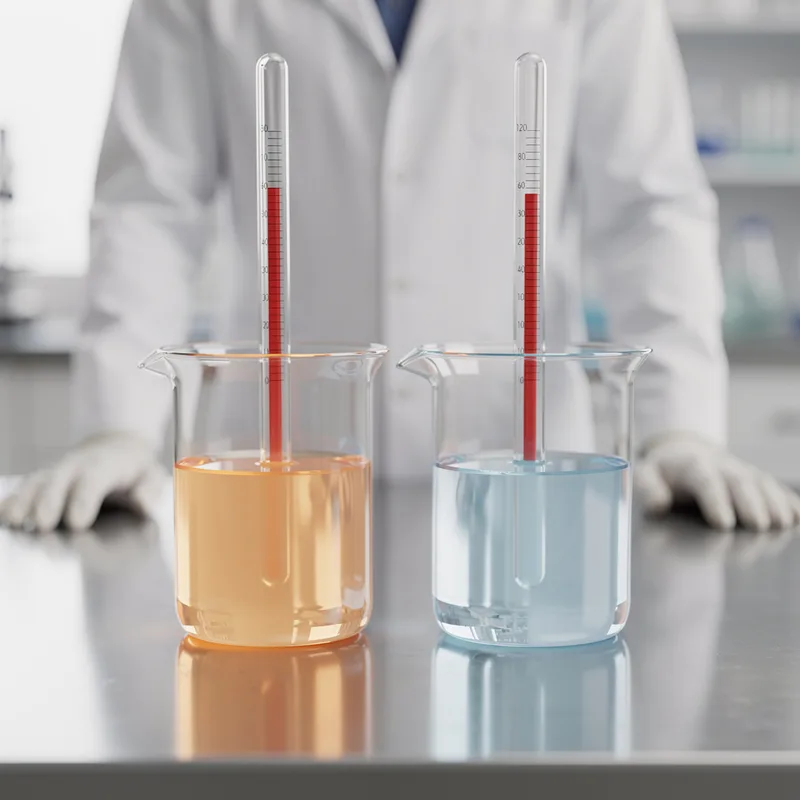
to equilibrate
 1
8.6
1
8.6

- verb
- /ˌiːkwɪˈlɪbreɪt/
- The temperature inside the room took some time to equilibrate after the air conditioning was turned on.
- equilibrated system
Loading YouTube…
Watch on YouTubeSo what I've proven here is that a parcel of air, if it's equilibrated, its pressure with the environment is going to be less dense.
- So what I've proven here is that a parcel of air, if it's equilibrated, its pressure with the environment is going to be less dense.
- And when we look at prices equilibrating, these are these.
- You wait long again, it equilibrates again, it looks conventional.
- So I I believe that over time these factors re equilibrate, but fat could come back faster.
- We don't believe this is not a process that can equilibrate.
Examples
-
Therefore, the black market rate can be expected to equilibrate supply and demand for the currency and, thus, to reflect an equilibrium in the market.
Academic text (1991) -
Lateral shifts in pelvic angle cause a redistribution of air in the cushion, which tends to equilibrate pressures between the ischial tuberosities.
Academic text (1991) -
Open systems tend to equilibrate faster than closed systems.
-
Gas prices in Germany equilibrate against alternative fuels
Academic text (1990) -
The question is how long it takes the oceans to equilibrate with the new atmospheric state?
Blog text (34) -
There is no reason to think the climate system equilibrates rapidly.
Blog text (27) -
The muscle flap was then allowed to equilibrate for 30 minutes to prevent any surgical trauma from affecting the microcirculation measurements.
Academic text (2015) -
It's the weather that sets up all these energy flows, that equilibrates our planet, that moves heat from the equator to the poles and so forth.
-
After thermal curing and cooldown to room temperature, the specimens were stored at room temperature and 50% relative humidity to equilibrate their moisture content.
Academic text (2017) -
After mixing the chemicals, you should let the solution equilibrate for a few minutes before measuring the pH.
Synonyms
 285
2.0
285
2.0
To keep something steady so it does not fall
 94
3.7
94
3.7
To change something to reduce a problem caused by something else
 75
4.3
75
4.3
To become steady and stop changing
 25
3.5
25
3.5
Make things equal and make up for a lack so nothing is too much or too little
 10
4.4
10
4.4
To make things the same in amount, status or value
 9
5.1
9
5.1
To balance the effect of something by adding an opposite force
 5
4.1
5
4.1
To change something so its parts or amounts become more even
 1
7.9
1
7.9
To make something even in different places or at different times

To make something balanced, for example temperature or teams
How Balanced

Surface Forms
Morphology
equilibrate = equilibrium (transparent) = equilibrium + ate
The verb is directly formed from the noun 'equilibrium' with the productive verbalizer '-ate', meaning 'make or become balanced'.
Etymology
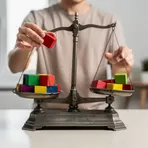
Equilibrate comes from Latin parts equi- 'equal' and libra 'scales', the same root you see in equilibrium and the star sign Libra. So to equilibrate something is to make it equal or balanced.