

epithelial tissue
- noun
- /ˌɛpɪˈθiːliəl ˈtɪʃuː/
- Specialized
- An estimated 80 percent of solid tumors are cancers of the epithelial tissue.
Examples
-
Two pairs of ciliated projections of epithelial tissue on the sides of the light organ swirl bacteria-containing seawater into the pores of the crypts.
Academic text (1993) -
Nervous tissue, muscular tissue, epithelial tissue are those are examples of tissues that form, that form organs.
-
An estimated 80 percent of solid tumors are cancers of the epithelial tissue.
Blog text (7) -
Epithelial tissues line the outer surfaces of epithelial tissue and blood vessels throughout the body.
-
This protein showed the highest expression in kidney and other epithelial tissues.
Synonyms
 2
9.1
2
9.1

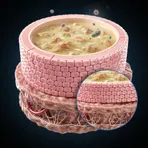
A thin layer of cells that covers body surfaces and lines organs
Surface Forms
Morphology
The phrase is transparently compositional: the adjective 'epithelial' (relating to a thin surface-covering type of cell layer) simply modifies 'tissue' (a group of cells), so the meaning 'a tissue made of epithelial cells that covers surfaces or lines organs' follows directly from the parts. This adjective+noun pattern is standard in English and mirrored in many other languages, so a learner who knows both constituents should be able to infer the MWE's meaning.
Etymology
Epithelial tissue comes from Greek parts epi- meaning 'on' and thelium meaning 'nipple', because early doctors used the word for thin skin that sat on small surfaces. Imagine a thin layer sitting 'on' the body or an organ. That's why epithelial tissue means the 'outer' or 'lining' layer of the body's surfaces and organs.