
episteme


 1
9.9
1
9.9
- noun
- /ˌɛpɪˈstɛm/
- Formal
- So Aristotle said that there were three forms of knowledge, Tecnae, episteme and phrenesis.
- episteme or knowledge
Loading YouTube…
Watch on YouTubeAlthough notice that Aristotle will consider military science an episteme at at certain points.
- Although notice that Aristotle will consider military science an episteme at at certain points.
- Who has knowledge episteme in in Greek.
Examples
-
The scientific community operates within a particular episteme that shapes how research is conducted and theories are evaluated.
-
In modern society, another form of knowing, episteme, or factual knowledge, has gained ascendency that, while investing the expert with exaggerated authority, tends to devalue personal experience.
Academic text (1996) -
So he says, look, knowledge itself, episteme is knowledge of something.
-
In the constitution of the modern episteme, the silent father regains his place.
Academic text (2002) -
"Within an overall disciplinary episteme, ethnographic texts serve to place their indigenes in the subject position."
Academic text (1993) -
True knowledge, episteme, that which is unchanging, universal, is what is really real—and only thought has the power to grasp it.
Academic text (2002) -
Michel Foucault's concept of episteme suggests that there is a pre-existing regime in our consciousness delimiting conceptualization and thinking, from which we would have a hard time escaping.
Academic text (2016) -
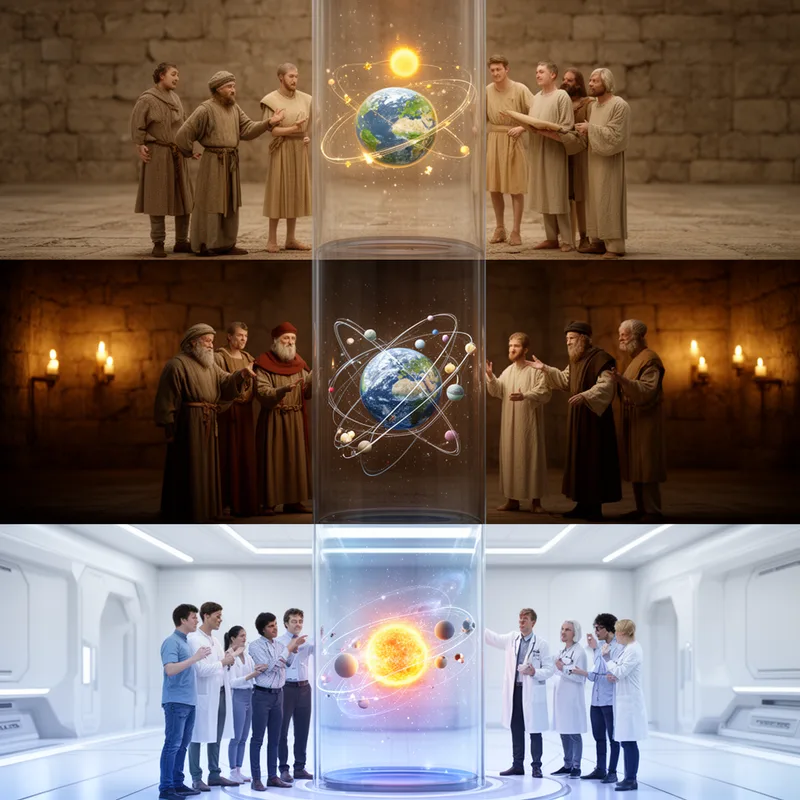
In the context of philosophy, episteme refers to a type of knowledge that is accepted as valid and certain in a given era.
-
Historically, each culture has its own episteme, representing the ideas and knowledge that are deemed true during that time.
Surface Forms
Etymology
Episteme comes from the Greek epistēmē, which means 'knowledge'. It names the body of ideas and facts a society accepts as 'true' at a certain time, so thinking of it as a 'system of knowledge' helps you remember why it means the accepted way of knowing in a historical period.