
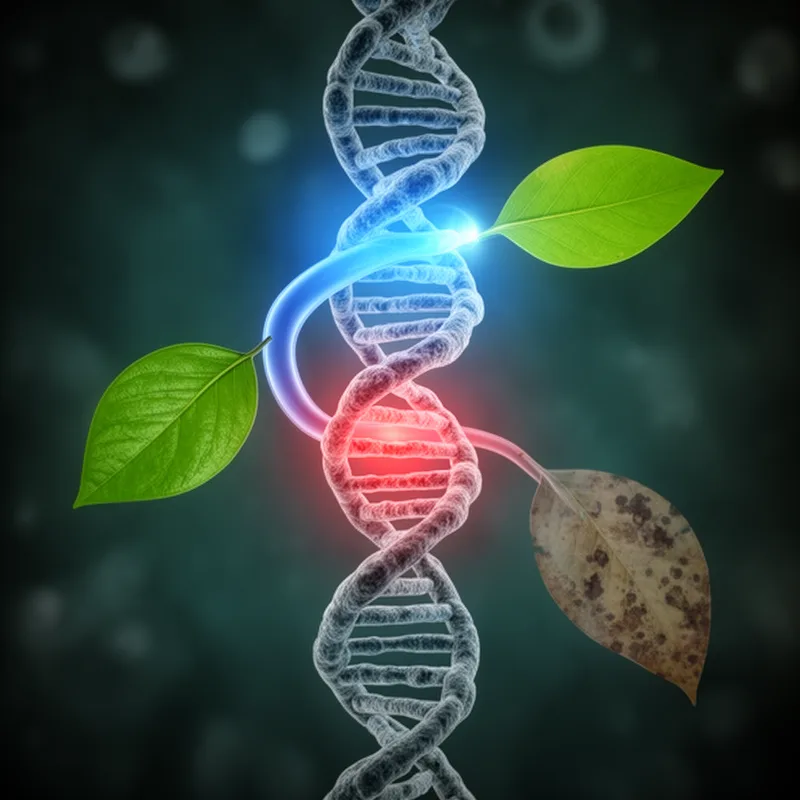
epistasis
- noun
- /ˌɛpɪˈsteɪsɪs/
- Specialized
- Researchers found that epistasis can complicate the mapping of genetic diseases.
- sign epistasis
- reciprocal sign epistasis
- global reciprocal sign epistasis
Examples
-
In contrast, epistasis refers to the dependence of mutational effects on the state of other loci 15, 21, 70.
Academic text (2018) -
The first case is the one without sign epistasis.
Academic text (2018) -
In general, reciprocal sign epistasis between two loci is limited to a particular genetic background, a situation that we refer to as local reciprocal sign epistasis.
Academic text (2018) -
In this case, mutations on m can affect whether mutations on l are beneficial or not. If sign epistasis is not present, then there is only magnitude epistasis, in which m can affect the quantitative benefit of a mutation on l, but cannot change it from beneficial to deleterious.
Academic text (2018) -
Bottom: Example of fitness graphs on three loci without any sign of epistasis (left) and with global reciprocal sign epistasis (right). Each axis corresponds to one of the loci, and arrows point towards increasing fitness.
Academic text (2018) -
In genetics, epistasis occurs when one gene's effect is masked by another gene.
-
The study of epistasis helps scientists understand how genes interact to influence traits.
Synonyms
One gene hides the effect of another gene
Surface Forms
Morphology
Etymology
The word epistasis comes from the Greek parts epi- 'upon' and stasis 'standing', a simple image of one thing standing on another. That's why in genetics epistasis means one gene 'stands over' a different gene and hides or changes its effect.

