
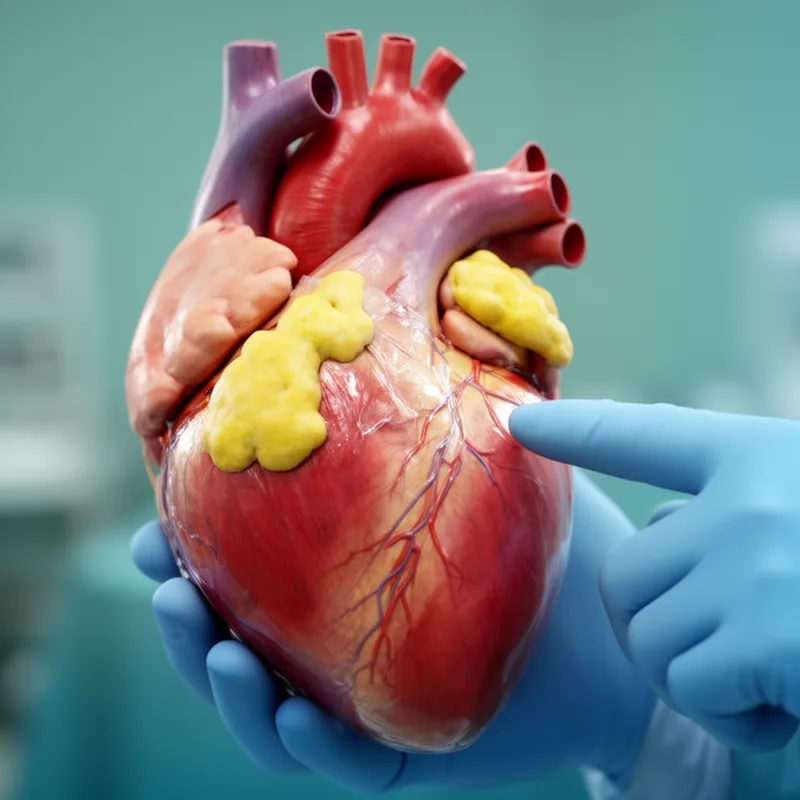
epicardial


 1
8.6
- adjective
- /ˌɛpɪˈkɑrdɪəl/
- Specialized
- The second branchial arch proliferates caudally toward an enlarging epicardial ridge as the elongated pharyngobranchial ducts lose their pharyngeal connection.
- epicardial artery
- epicardial coronary
- epicardial left anterior
Examples
-
Wall thickening in the subepicardium, however, was found to be depressed out of proportion to the reduction in epicardial blood flow.
Academic text (1995) -
Unlike the coronary microcirculation, epicardial coronary arteries do undergo atherosclerotic remodeling of the vessel wall.
Academic text (1991) -
The moderate acetylcholine-induced vasoconstriction of epicardial coronary arteries in both groups also accorded with our previous observations.
Academic text (1991) -
Catecholamine-induced epicardial coronary artery spasm as a mechanism for NSM remains controversial.
Academic text (2016) -
However, since its first characterization, other examples of stunned myocardium have surfaced that do not link the pathophysiology with epicardial coronary thrombotic occlusion.
Academic text (2016) -
L-arginine did not affect the acetylcholine-induced vascular response of the epicardial left anterior descending coronary artery in patients with and without hypercholesterolemia.
Academic text (1991) -
It consists of the epicardial organ (which is derived from the liver) chucking cells at the surface of the heart, which then band together and eventually invade the aorta at the ostea.
Blog text (28) -
It may not be too surprising, therefore, that short-term administration of L-arginine did not affect the vasoconstriction of the epicardial left anterior descending artery in response to acetylcholine.
Academic text (1991) -
The moderate vasoconstrictor effect of acetylcholine on the epicardial left anterior descending coronary artery was not affected by L-arginine, either in controls or in patients with hypercholesterolaemia.
Academic text (1991) -
The epicardial layer of the heart plays a crucial role in protecting the organ from infections.
Synonyms
 142
4.1
About the heart and how it works
Surface Forms
Morphology
epicardial = epicardium (transparent) = epi + cardi + al
The word is a standard relational adjective formed from the anatomical noun 'epicardium' with the suffix -al, so the meaning is compositionally recoverable.
Etymology
The word epicardial breaks into epi- meaning 'on' and cardia meaning 'heart', the same root you see in cardiac or cardio. So epicardial refers to something 'on' the heart, especially the outer layer of the heart.