
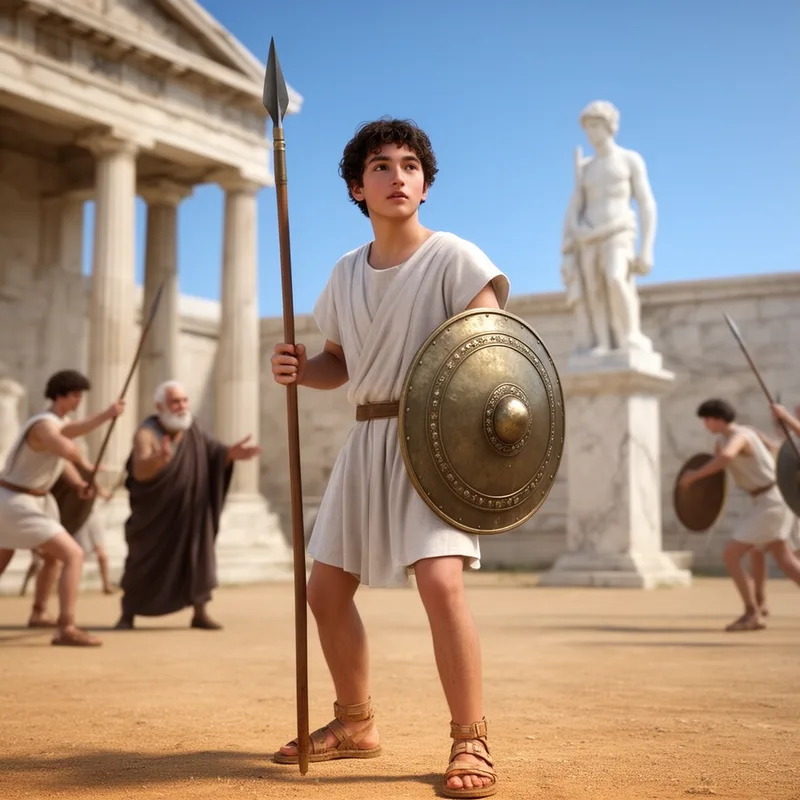
ephebe


 1
9.9
- noun
- /ɪˈfiːbi/
- Archaic
- More startled ephebes approached; the Pekingese yelped.
Examples
-
The cult of ephebes, or attractive male youths, originally was a privilege of the man in power.
Academic text (1990) -
" How were your ephebes today? What came out of your writing class?
Fiction book (1990) -
Two or three of the ephebes carried her away, slowly, with stately paces, as if they were part of an opera.
Fiction book (1994) -
Homoerotic themes in classical Persian and Arabic poetry, notably the cult of "ephebes" or "beardless youth," have received attention elsewhere.
Academic text (1990) -
In ancient Greece, many artists depicted the ephebe as a symbol of youthful beauty and vitality.
-
The ephebe trained daily in physical exercises to prepare for the upcoming athletic competitions.
-
During the festival, the young ephebe showcased his skills in wrestling and poetry before an admiring crowd.
How Young

Surface Forms
Etymology
Ephebe comes from the Greek ephebos, which means 'young man' or 'youth'. In ancient Greece an ephebe was a young man in training and often shown as a perfect figure in art, so today ephebe still means a young, often idealized, man.