
eolith
- noun
- /ˈiːəˌlɪθ/
- Archaic
- Some scientists regard eoliths as significant findings, even if they are not man-made tools.
Examples
-
Some archaeologists once believed that eoliths represented the earliest human technology.
-
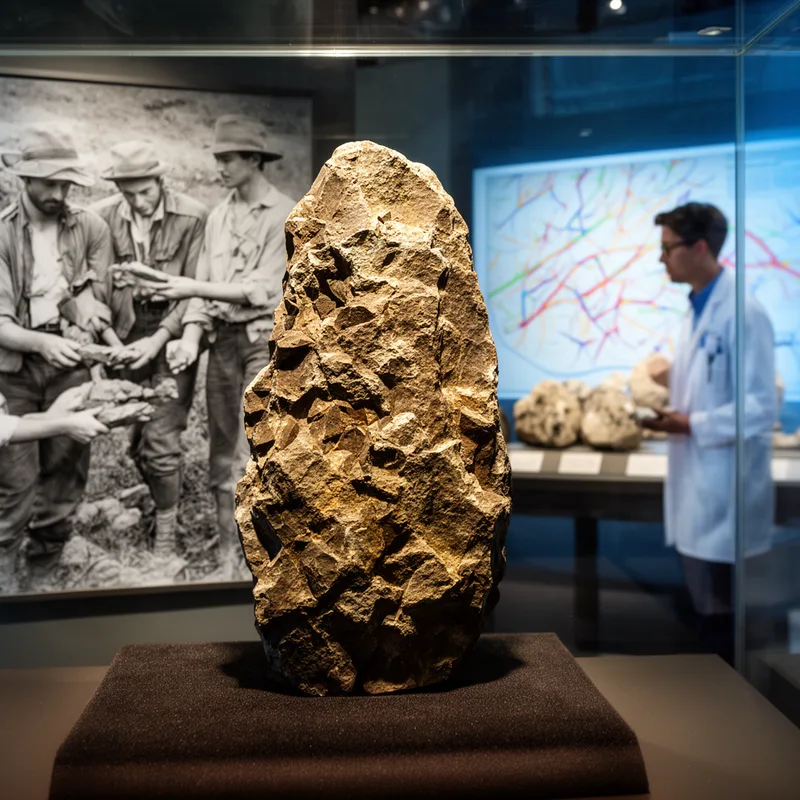
Museum exhibits sometimes include eoliths as examples of primitive stone artifacts.
-
The authenticity of eolith discoveries has sparked debates within the scientific community.
-
The archaeologist discovered an eolith in the ancient riverbed.
-
Some believe that the eoliths found in this area are tools.
-
The archaeologist discovered a eolith in the ancient riverbed, showcasing its natural formation.
-
In the museum, visitors can see eoliths displayed alongside other stone formations that highlight their natural origins.
Surface Forms
Morphology
eolith = eo + lith
The combining forms 'eo-' and '-lith' are not familiar standalone English words for most learners, so the meaning 'early/dawn stone' is not reliably derivable from its parts.
Etymology
The word eolith comes from the Greek parts eo- meaning 'dawn' and -lith meaning 'stone', the same -lith you see in Neolithic. It was used for rough stones thought to be tools from the 'dawn' of human life, which is why people first called them early tools even though many are now seen as natural stones.

