
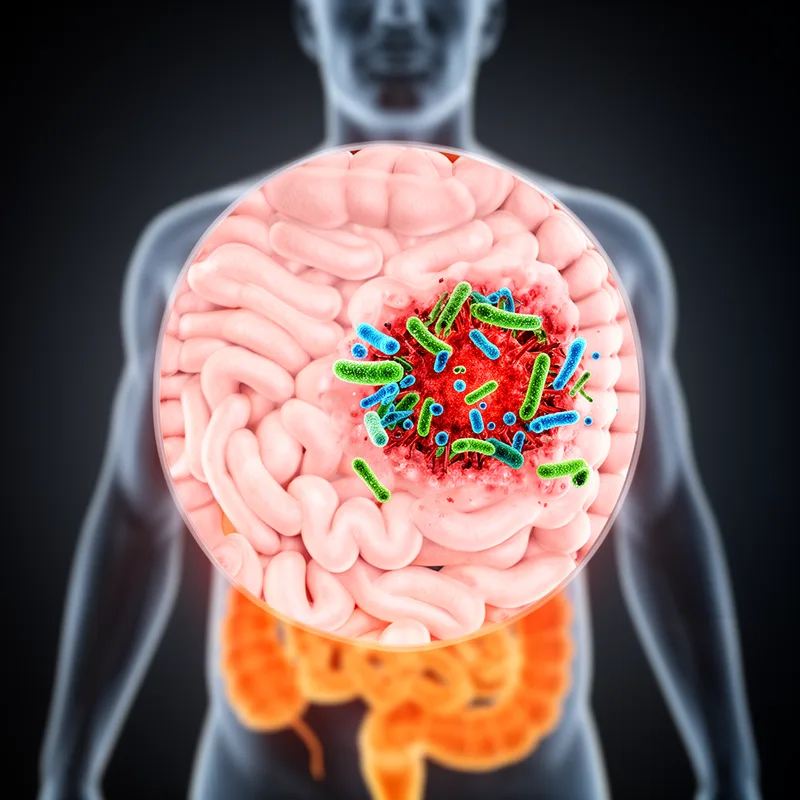
enteropathogenic


 1
9.9
- adjective
- /ˌɛntəroʊpəˈθædʒɪk/
- Specialized
- Infection with enteropathogenic bacteria can lead to severe gastrointestinal illness.
- enteropathogenic bacteria
Examples
-
Enteropathogenic bacteria were isolated in 47% of the 166 individuals who fell ill with diarrhea.
Academic text (1992) -
Enteropathogenic bacteria were not isolated from any of the pre-departure specimens but were present during or after the holiday in 47% of tourists with travellers' diarrhoea, and in 14% of those without diarrhoea.
Academic text (1992) -
None of the 100 fecal specimens collected before departure was positive for enteropathogenic bacteria.
Academic text (1992) -
Each of the enteropathogenic species looked for was significantly more common among participants with diarrhoea than in those without (Fig. 2), which suggests that the vaccine did not protect against colonization.
Academic text (1992) -
Furthermore, the high protection rate against mixed infections fits these hypotheses: suppression of action of one enteropathogenic mechanism, in this case that of LT, made colonization by other enteropathogens less likely.
Academic text (1992) -
Sharma, A., & Rajput, S. (1996). Microbial quality and persistence of enteropathogenic Shigella in freshwater environments. Ecology, Environment & Conservation, 2, 29-36.
Academic text (2009) -
The study examined how enteropathogenic bacteria affect the health of children with diarrhea.
-
Health officials warned about the risks of enteropathogenic infections after several reported cases.
Surface Forms
Morphology
enteropathogenic = pathogenic (opaque) = entero + patho + genic
The word is formed by adding the classical combining form 'entero-' to 'pathogenic', but both parts are specialist medical vocabulary, so the meaning is not readily inferable for an average learner.
Etymology
Enteropathogenic breaks into entero- 'intestine', patho- 'disease' seen in pathogen 'a germ that causes disease', and -genic 'producing'. So, enteropathogenic means 'producing disease in the intestines', which is why we use it for bacteria that cause intestinal illness.