
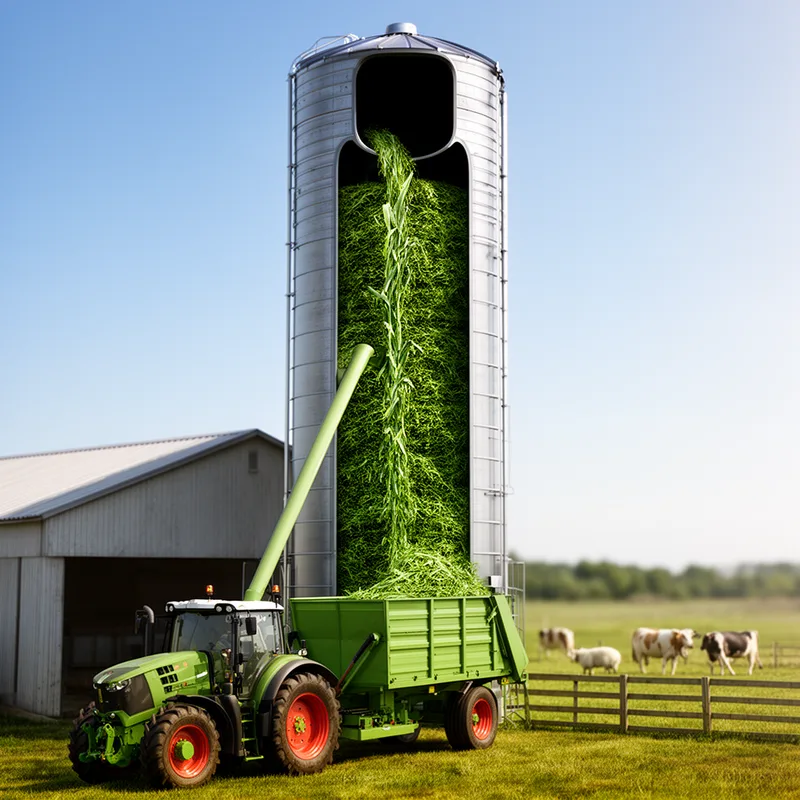
to ensile
- verb
- /ɛnˈsaɪl/
- Specialized
 :
ensilar
:
ensilar
- Farmers often ensile their crops to ensure they have enough feed for the winter.
Examples
-
Maize and dab grass were ensiled without molasses (control), or with the addition of 2%, 4%, or 6% molasses.
Academic text (2015) -
In all cases, material was ensiled in large plastic drums lined with polythene sheet and then compressed through manual trampling.
Academic text (2015) -
Dab grass mixed with maize (ratio 1:3) was ensiled without molasses (control), or with 2%, 4%, and 6% molasses.
Academic text (2015) -
To preserve the nutrients, we decided to ensile the fresh forage in airtight containers.
-
During the rainy season, it's crucial to ensile the grass promptly to prevent spoilage.
Synonyms
 1
4.8
1
4.8

To store grain or animal feed inside a tall farm container

Storing grain or animal feed in a tall container to keep it dry

Stored in a tall farm container to keep grain dry
Surface Forms
Morphology
ensile = silo (transparent) = en + sile
The verb is formed by the productive English prefix 'en-' meaning 'put into' applied to the storage concept (most recognizably represented by 'silo'), so the action meaning is directly derivable.
Etymology
Ensile comes from the parts en- 'in' and silo, the farm container for stored feed, so it means to put fodder into a silo. That's why to ensile is to store green feed like corn or grass in a silo to keep it for winter as silage.