
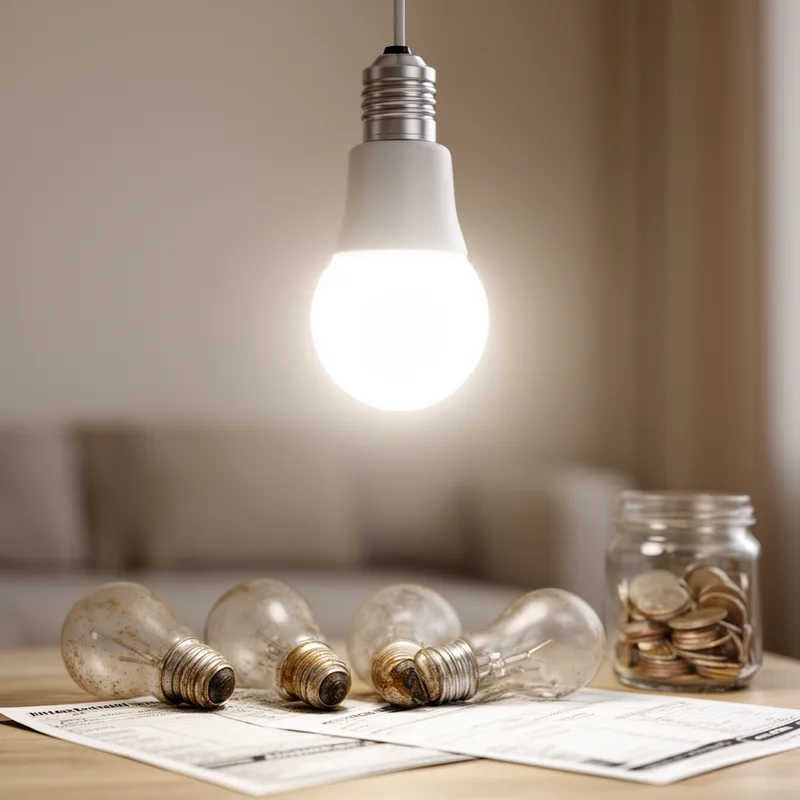
energy-saving light
- noun
- /ˈɛnərdʒiˌseɪvɪŋ laɪt/
- Installing energy-saving light bulbs can significantly reduce your electricity bill while being environmentally friendly.
- energy-saving light bulb
Examples
-
No one has mentioned the very dangerous mercury vapors that are present in the new little energy-saving light bulbs.
Blog text (27) -
Improved energy efficiency, such as installing energy-saving light bulbs, home insulation, and automatic temperature controls, can reduce the need for these investments, lower electricity rates by reducing peak demand, and minimize pressure on strained natural gas supplies.
Academic text (2007) -
Many households are making the switch to energy-saving light bulbs to help conserve energy and lower costs.
-
The new energy-saving light bulbs not only last longer but also provide the same brightness as traditional bulbs at a fraction of the energy usage.
Synonyms

 12
3.5
12
3.5

An energy-saving light bulb that uses a small fluorescent tube to make light
 7
3.9
7
3.9
A long tube light used indoors that gives bright light with little heat
 1
3.4
1
3.4
A small light bulb that uses little electricity and lasts longer


 1
2.5
1
2.5
A bulb that uses less electricity than old bulbs, for example LED bulbs
How Energy-Efficient

Surface Forms
Morphology
energy-saving + light
The meaning 'a light that uses less energy' is directly and compositionally derived from 'energy-saving' (saving energy) + 'light' (a bulb), so a learner who knows the constituent words can infer the MWE. This adjective+noun compound follows common morphological and semantic patterns in English and many other languages, making it immediately comprehensible to B1 learners.
Etymology
The name energy-saving light comes from a simple picture: a bulb that 'saves' energy while still giving light, like a lamp that uses a small amount of power instead of a lot. That's why it means a bulb made to 'use less energy' and so lower your electricity bills.