
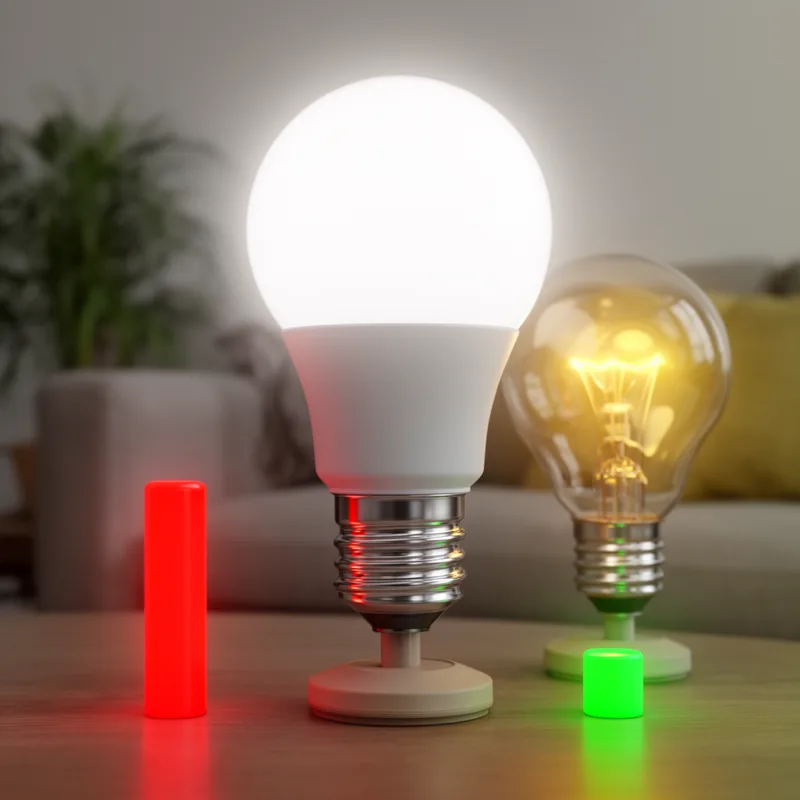
energy-saving light bulb


 1
2.5
1
2.5
- noun
- /ˈɛnərdʒiˌseɪvɪŋ laɪt bʌlb/
- Improved energy efficiency, such as installing energy-saving light bulbs, home insulation, and automatic temperature controls, can reduce the need for these investments, lower electricity rates by reducing peak demand, and minimize pressure on strained natural gas supplies.
Examples
-
Using energy-saving light bulbs not only helps the environment but also saves you money.
-
You can take easy steps, such as using energy-saving light bulbs, to start a green life.
Blog text (11) -
No one has mentioned the very dangerous mercury vapors that are present in the new little energy-saving light bulbs.
Blog text (27) -
Switching to energy-saving light bulbs can significantly lower your electricity bill.
-
Many households are replacing their old bulbs with energy-saving light bulbs to reduce energy consumption.
Synonyms
 12
3.5
12
3.5
An energy-saving light bulb that uses a small fluorescent tube to make light
 7
3.9
7
3.9
A long tube light used indoors that gives bright light with little heat
 1
3.4
1
3.4
A small light bulb that uses little electricity and lasts longer
A light bulb that uses less electricity, like an LED or a compact fluorescent
How Energy-Efficient

Surface Forms
Morphology
The adjective 'energy-saving' is transparently built from 'energy' + 'saving' meaning 'reducing or using less energy', and 'light bulb' is a literal noun phrase for a lamp; together they yield 'a bulb that uses less energy'. This straightforward adjective+noun composition is cross-linguistically common, so a B1 learner who knows the constituent words can reliably infer the MWE's meaning.
Etymology
Energy-saving light bulb comes from the idea of a light bulb that saves energy. So the name means a bulb that 'uses less electricity' than older bulbs.