
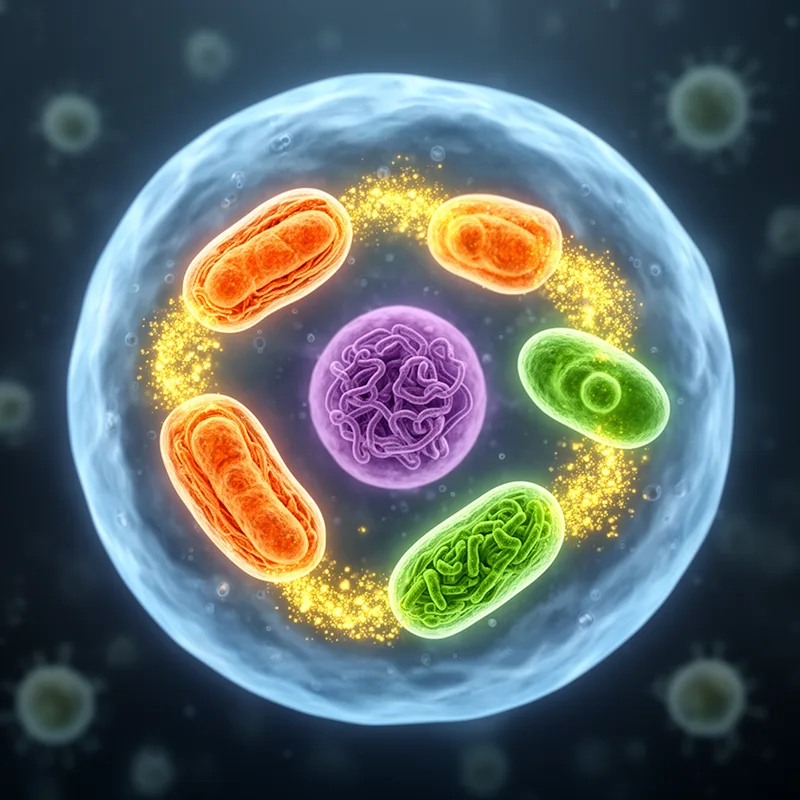
endosymbiosis


 1
9.5
- noun
- /ˌɛndoʊsɪmˈbaɪoʊsɪs/
- Specialized
- Photosynthesis had evolved in a few Monerans, but the three nutritional modes became well established only after the first eukaryotic protists evolved through endosymbiosis.
Loading YouTube…
Watch on YouTubeYou see the emergence of eukaryotes, endosymbiosis, also another singular event and then you move forward and then comes the plants.
- You see the emergence of eukaryotes, endosymbiosis, also another singular event and then you move forward and then comes the plants.
Examples
-
Eukaryotes are high energy and have been able to vastly increase the genome size by having higher energy density from the mitochondrion endosymbiosis event (Lane's energy theory).
Blog text (18) -
Similarly, her emphasis on cellular evolution (including endosymbiosis) and the prokaryote-eukaryote dichotomy for understanding cell structure provided another rationale for eventually accepting the five-kingdom system.
Academic text (2012) -
You see the emergence of eukaryotes, endosymbiosis, also another singular event and then you move forward and then comes the plants.
-
The process of endosymbiosis explains how complex cells evolved by one organism living inside another.
-
In the theory of endosymbiosis, chloroplasts and mitochondria are believed to have originated from free-living bacteria.
-
Research on endosymbiosis reveals how cooperation among organisms can lead to the evolution of complex life.
Surface Forms
Morphology
Etymology
The word endosymbiosis comes from endo- 'inside' and symbiosis 'living together', and the bios part is the same root as in biology 'life'. So endosymbiosis is when one living thing lives inside another and they live together.