
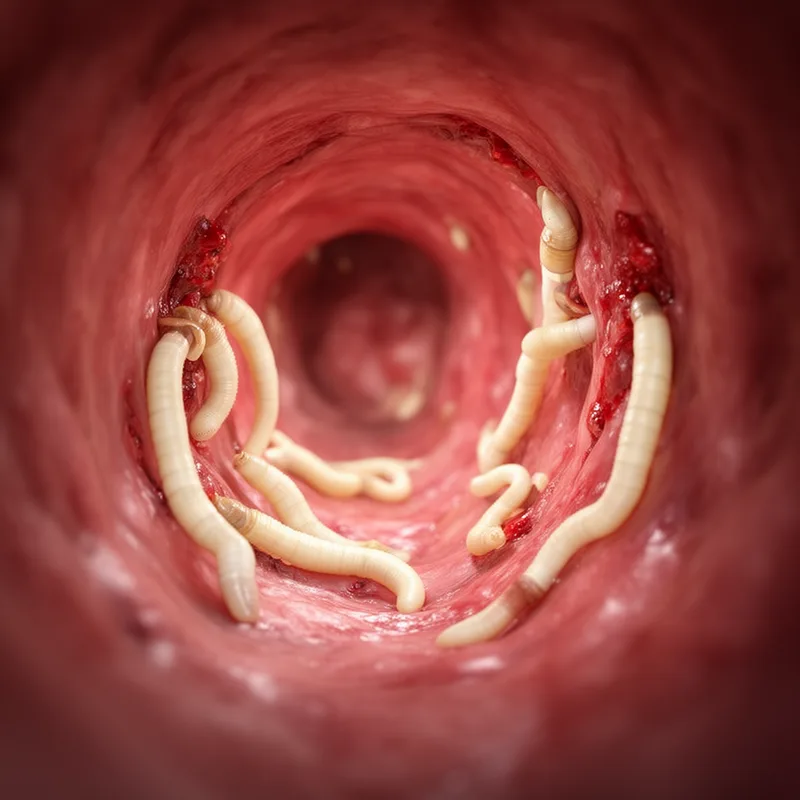
endoparasitic
- adjective
- /ˌɛndəʊˈpærəˌsɪtɪk/
- Specialized
- Some endoparasitic species, like certain tapeworms, live in the intestines of their hosts.
Examples
-
Endoparasitic forms of L. clarki (those that invade mosquito larvae) had first been noted by researchers in the 1970s.
Academic text (1992) -
The doctor explained that endoparasitic worms can cause serious health issues in humans.
-
Scientists study endoparasitic organisms to understand their effects on the immune system of plants.
Synonyms

Living inside the body of an animal, usually as a parasite

Living inside an animal, usually as a parasite
How Internal
- Specialized
 4
7.2
4
7.2


- Specialized
Surface Forms
Morphology
endoparasitic = endoparasite (semi-transparent) = endo + parasite + ic
Formed from 'endoparasite' + '-ic'; 'parasite' is common but the combining form 'endo-' is a specialized biomedical prefix that may not be fully familiar to average learners.
Etymology
Endoparasitic comes from the prefix endo- meaning 'inside' and the word parasite, which means 'one who lives on another and takes its food'. So an endoparasitic organism lives inside a host and feeds from it.