
endodontic


 1
7.7
- adjective
- /ˌɛndəˈdɒntɪk/
- Specialized
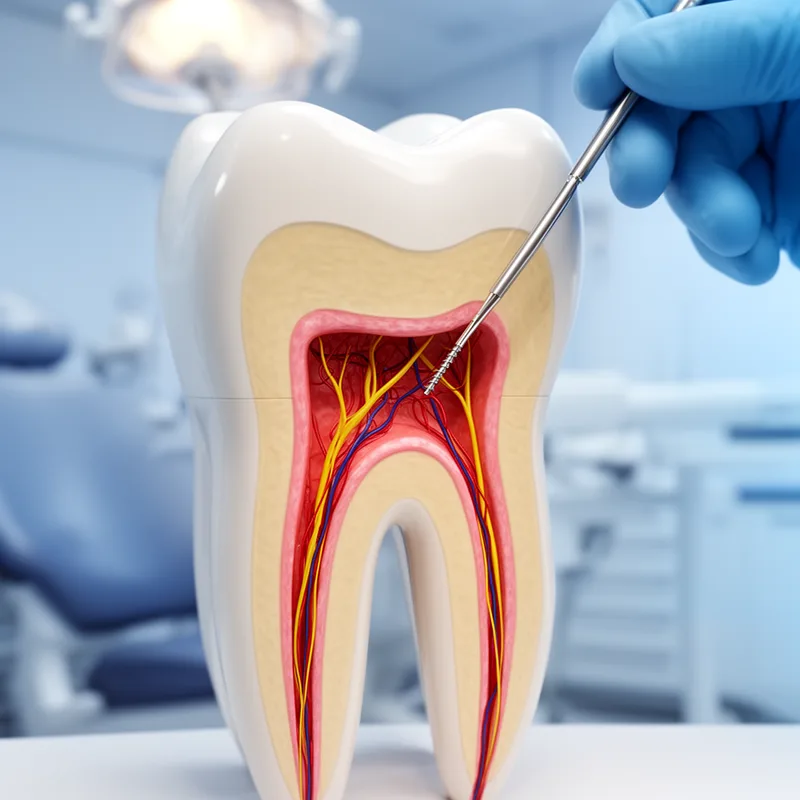
- An endodontic treatment is necessary when the dental pulp becomes infected or damaged.
- endodontic treatment
Examples
-
One posterior abutment tooth needed endodontic intervention 6.7 years after cementation of the FDP.
Academic text (2016) -
Kavo of Biberach, Germany, developed a sterilization box for its endodontic files that lets a dentist change files on the fly as the drill spins.
Academic text (2001) -
Moreover, biological failures (e.g., endodontic or caries-triggered extraction
Academic text (2016) -
One of these FDPs also showed a crack throughout the buccal veneering, which originated from an access cavity for endodontic treatment.
Academic text (2016) -
Two anterior abutment teeth (2 patients) needed endodontic treatment after 7.3 and 12.3 years, respectively.
Academic text (2016) -
Endodontic complications that caused extraction were found in two anterior and two posterior abutment teeth (3 patients) after 4.2, 10.0, 12.6, and 12.6 years, respectively.
Academic text (2016) -
The dentist explained that endodontic therapy can save a tooth from extraction.
-
During the endodontic procedure, the dentist removed the infected pulp and sealed the tooth.
Surface Forms
Morphology
endodontic = endodontics (opaque) = endo + odont + ic
Composed of technical Greek combining forms ('endo-' + 'odont-') plus the adjectival suffix '-ic', which is not transparent to average learners unfamiliar with medical terminology.
Etymology
Endodontic comes from Greek parts endo- 'inside' and odont 'tooth', the same 'tooth' part you see in orthodontist. So, endodontic means care of the inside of a tooth, like treatment of the root, which is why an endodontist often does root canal work.