
embolic
 1
8.6
1
8.6

- adjective
- /ɛmˈbɑlɪk/
- Specialized
- Females with embolic episodes have a better outcome than a male diabetic with thrombosis.
- embolic event
- embolic occlusion
- embolic phenomena
Examples
-
In all twelve patients with embolic occlusion, the aorta was normal, and emboli originated in the heart.
Academic text (2007) -
In the clinical trial, no cases of serious embolic disease occurred among 84 long-term hospital inpatients treated with HRT for 10 years, whereas one case of VTE occurred among the untreated group.
Academic text (1999) -
These results probably reflect the low risk of embolic events in primary prevention studies, especially in patients under 75 years.
Academic text (1994) -
Embolic phenomena from AF can increase stroke risk by up to seven times.
Academic text (2010) -
More than two-thirds of embolic phenomena involve the central nervous system, and there are no previous reports of tumor emboli to the pancreas.
Academic text (2007) -
Other outcomes of interest were uterine bleeding, endometrial cancer, breast cancer, stroke, other embolic events, fractures, and compliance with treatment.
Academic text (2002) -
They can also spread indirectly through the valveless veins of the sinuses and orbit as a result of a thrombophlebitic or embolic condition.
Academic text (2002) -
Prompt anticoagulation is suggested in patients with embolic occlusions to minimize a high incidence of recurrent arterial embolism.
Academic text (2007) -
Biopsy also revealed some leukocytoclasia that was consistent with thrombosis secondary to Waldenström's macroglobulinemia rather than a septic embolic event.
Academic text (2006) -
The patient was diagnosed with an embolic stroke due to a blood clot traveling from the heart.
Synonyms


 1
8.9
1
8.9
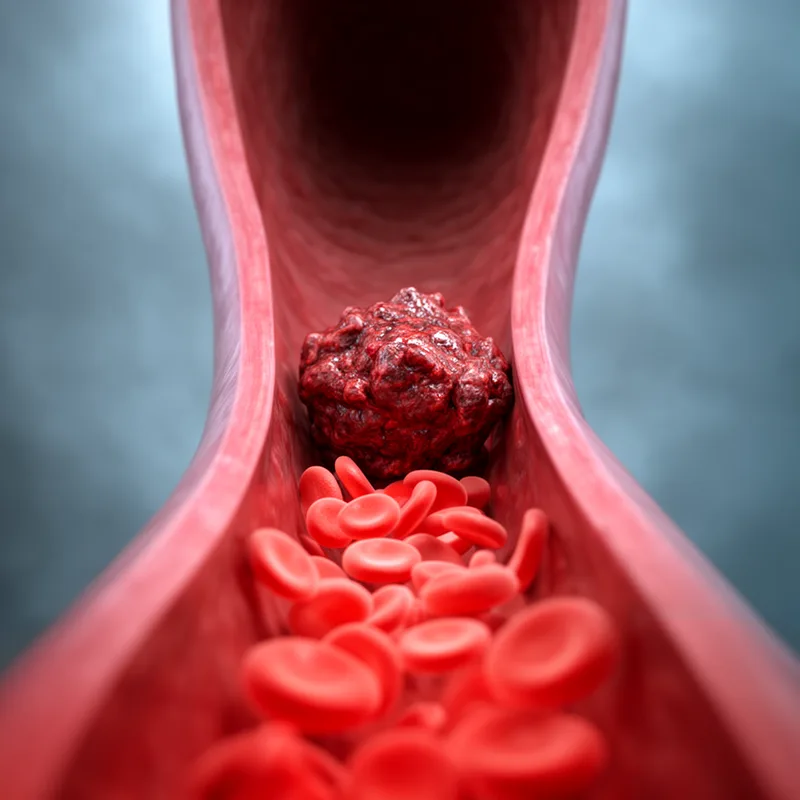
A health problem caused by a blood clot that blocks a vein or artery
Surface Forms
Morphology
Etymology
Embolic comes from Greek parts em- ('in') and ballein ('to throw'), giving the idea of something 'thrown in'. Imagine a small 'plug' or blood clot 'thrown' into a blood vessel and stopping the flow; that's why embolic describes problems caused by a clot or plug that travels and blocks blood flow.