

elegy
 6
8.1
6
8.1

- noun
- /ˈɛlədʒi/
- Literature
- In the memorial gathering, they recited an elegy honoring the contributions of the departed.
- elegy poem
- elegy for love
Loading YouTube…
Watch on YouTubeHe wrote a piece called Elegy in memory of Maurice Ravel and it's a really beautiful piece that's based on theme and variation.
- He wrote a piece called Elegy in memory of Maurice Ravel and it's a really beautiful piece that's based on theme and variation.
Examples
-
Shelley's elegy for Keats.
-
He wrote a piece called Elegy in memory of Maurice Ravel and it's a really beautiful piece that's based on theme and variation.
-
No mass was said for Max, and I did not write an elegy for his memorial service either.
Fiction book (2000) -
Farewell elegy to my dear Elizabeth.
-
Music is the food of love; it is also the elegy for love's fading.
Academic text (1999) -
And I'm going to read a poem first, an elegy called Burial.
-
His grandfather could recite Gray 's Elegy in a Country Churchyard.
Fiction book (1995) -
We begin, then, at the top: the nine-line stanza of the "November" elegy for Dido, E.K.'s favorite poem in the book.
Academic text (2005) -
The poet wrote an elegy to express his sorrow for his late friend.
-
Her heartfelt elegy captured the love and loss felt by everyone at the funeral.
Synonyms
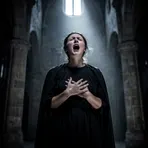 17
6.1
17
6.1
A sad song, poem, or cry that shows grief
 10
8.9
10
8.9
A musical piece sung at a funeral to honor the dead
 8
8.2
8
8.2
A slow sad song for people who have died
 7
7.7
7
7.7
A strong feeling of sadness that people show by crying


 1
9.9
1
9.9
A song or poem that expresses sadness for someone who has died
 1
9.9
1
9.9
A sad cry or song that shows sadness
How Mournful

Surface Forms
Etymology
Elegy comes from the Greek word elegos, which meant 'song of mourning' or 'lament'. So an elegy today is a poem or song that expresses sorrow, usually for someone who has died.