
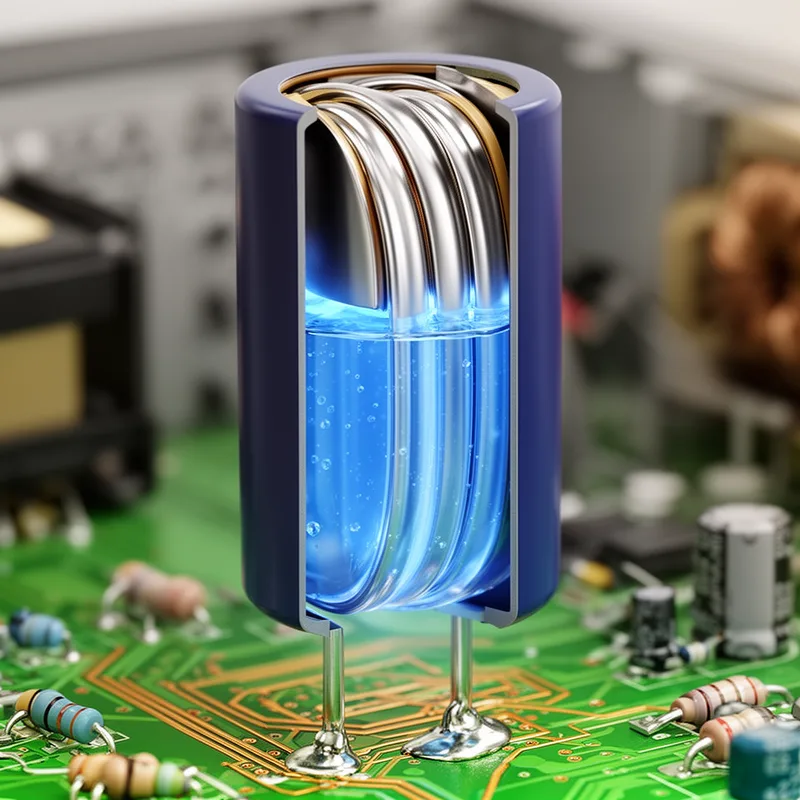
electrolytic capacitor
- noun
- /ɪˌlɛk.trəˈlɪt.ɪk kəˈpæs.ɪ.tər/
- Specialized
- Many electronic devices rely on an electrolytic capacitor to smooth out voltage fluctuations.
Examples
-
When assembling a circuit, make sure to connect the electrolytic capacitor in the correct orientation to avoid damage.
-
So this might be for example an electrolytic capacitor, whereas this might be film or ceramic capacitor.
-
An electrolytic capacitor is often used in power supply circuits to store energy temporarily.
Synonyms

A fixed device that stores electrical energy using a liquid between two metal plates with positive and negative sides
A small electrical part that stores electric charge using a liquid between metal plates
How Large


Surface Forms
Morphology
The noun is compositionally built: 'electrolytic' (relating to or using an electrolyte) modifies 'capacitor' (a device that stores electric charge), so the overall meaning is a capacitor that uses an electrolyte. Although the term is technical, the modifier+noun pattern is regular and cross-linguistically transparent, so a B1 learner who knows both constituents can derive the meaning.
Etymology
The name electrolytic capacitor comes from its parts: a special liquid called the electrolyte and a capacitor, which 'stores' electric charge. Picture two metal plates with a liquid between them holding a little electricity, so the name means a capacitor that uses an electrolyte to hold electric energy.