
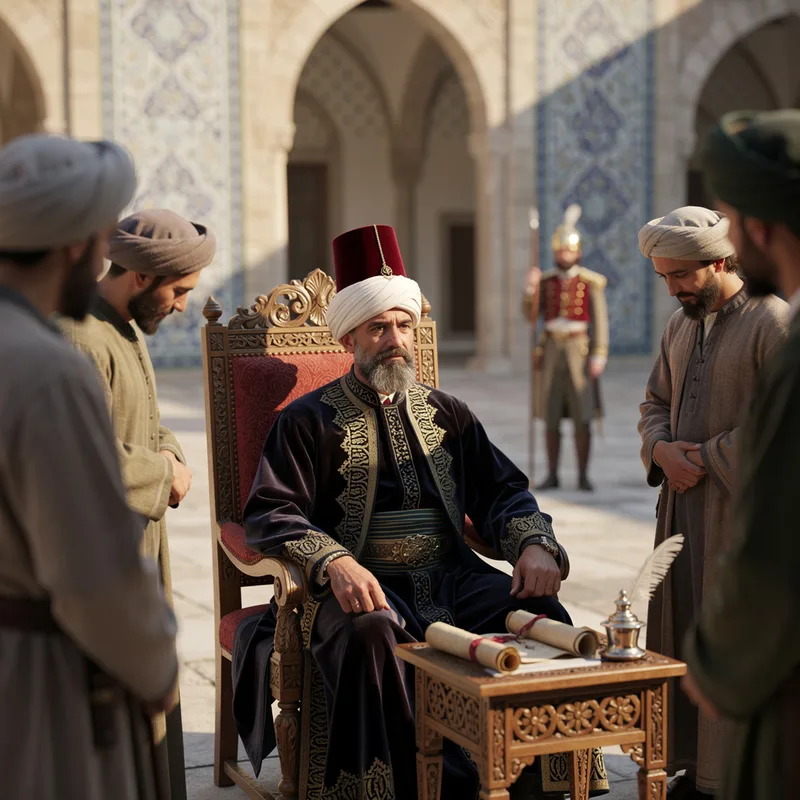
effendi
 2
9.9

- noun
- /ɛˈfɛndi/
- Archaic
- And now, esteemed effendi, we feast.
- Shoghi Effendi
Examples
-
They will not touch it, effendi.
-
How much? - Very old piece, effendi.
-
And what did the effendi think?
Fiction book (1993) -
Suddenly, the effendi came toward him carrying a basket of fruit.
Fiction book (1993) -
-Oh, it's old, effendi.
-
The effendi spoke Yiddish, but in dreams there is no difference between Yiddish and Arabic.
Fiction book (1993) -
Oh, that's wonderful, effendi.
-
For a long time, the effendi did not utter a word, staring at Nahman with glassy eyes and a frozen expression.
Fiction book (1993) -
On the following day, Satan appeared to him in the guise of a young Arab effendi who came to the inn and told the landlord that he wished to speak with his guest.
Fiction book (1993) -
The villagers showed great respect when the effendi arrived in their town.
Synonyms
 5
9.9
A title that people in Turkey, Egypt, or the old Ottoman Empire give to important men
 4
9.9
A senior government or army official in the Ottoman Empire
 1
9.9
A respected person who leads others, often in Turkish or Ottoman history


 1
9.8
A respectful Arabic word used to politely address a man like sir
 1
9.9
A respectful title used before a surname for officials or scholars in parts of Asia
Surface Forms
Etymology
Effendi comes from Turkish and earlier Persian and Arabic words like efendi and afand that meant 'master' or 'lord'. It was used as a polite title for important men, so it works like calling someone 'sir' or 'mister' to show respect.