

edge of the world
 5
7.6
5
7.6

- noun
- There were ruddy hills near the edge of the world, and the winds blew delicately about.
- fall off the edge of the world
- standing at the edge of the world
- place on the edge of the world
Loading YouTube…
Watch on YouTubeAnd this is an afterlife here in the sunlight beyond the edge of the world, among the Sons and Daughters of the sea.
- And this is an afterlife here in the sunlight beyond the edge of the world, among the Sons and Daughters of the sea.
Examples
-
As I stared at the distant horizon, it felt as though I was standing at the edge of the world.
Blog text (28) -
At the edge of the world, the cliffs drop steeply into the ocean below.
-
Welcome to the edge of the world.
-
Here I am, standing at the edge of the world, by myself.
Blog text (24) -
"What is beyond the edge of the world?"
Fiction book (1999) -
The whole experience felt like I was driving off the edge of the world.
Blog text (15) -
I am once again at the edge of the world.
Blog text (28) -
When you are there, it really does feel like you are looking over the edge of the world!
Blog text (10) -
There were mountains rolling away to the edge of the world on every side.
Fiction book (1999) -
His hand reaches out to touch the edge of the world.
Fiction book (1999)
Synonyms
 4
4.5
4
4.5
A way of saying someone will go very far to help or find something
 2
7.2
2
7.2
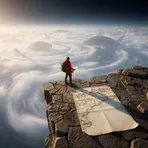
A very distant place that seems at the limit of the world
 1
9.8
1
9.8
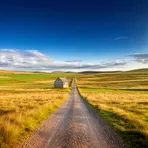
A place far from towns and people


 1
9.9
1
9.9
Far past what people can imagine or expect

To travel to a distant place to find adventure
How Remote

Surface Forms
Morphology
The phrase combines the literal meanings of 'edge' (outer boundary) and 'world' (the planet), so a learner who knows both words can readily infer a boundary of the world and, by straightforward metaphorical extension, a very remote or dramatic place. This construction and metaphor are cross-linguistically common, making the sense immediately accessible to a B1 learner without prior exposure.
Etymology
The phrase edge of the world comes from an old image of the earth as a place you could reach the very edge, like standing on a high cliff where the world seems to fall away into the sea. That's why people use it today to mean 'a very remote or dramatic place'.