
ecophysiology
- noun
- /ˌiːkoʊfɪziˈɑːlədʒi/
- Specialized
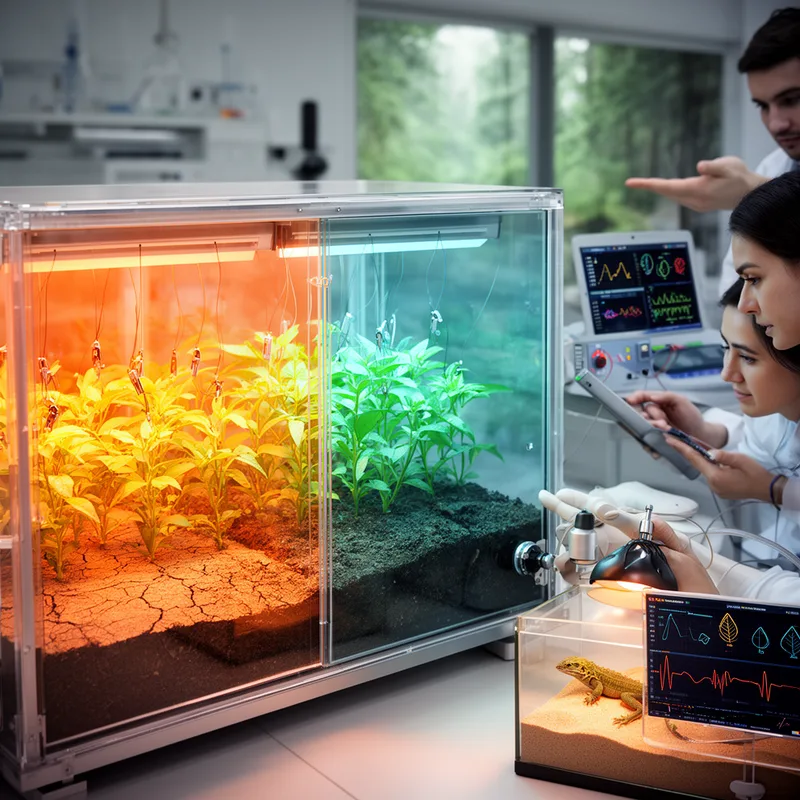
- In ecophysiology, scientists analyze the effects of soil moisture and temperature on the growth patterns of different plant species.
- evolutionary ecophysiology
- ecophysiology of plants
Examples
-
Most research on forest plant ecophysiology has been concentrated in the understory and has emphasized responses of plants to low and fluctuating light.
Academic text (1992) -
The study of ecophysiology examines how plants adapt their physiological processes to cope with environmental stressors.
-
Understanding the interactions among multiple traits and their consequences for plant performance remains one of the outstanding challenges in evolutionary ecophysiology.
Academic text (2000) -
These studies of genetic variation reflect a fruitful synthesis of the technical approaches of ecophysiology with the statistical methods of population biology and evolutionary genetics.
Academic text (2000) -
The authors of this article presented research findings and discussed future directions in evolutionary plant ecophysiology in a symposium at the 1998 annual meeting of the Ecological Society of America.
Academic text (2000) -
In this article, we have reviewed recent advances in evolutionary ecophysiology of plants, focusing on the analysis of the adaptive value of ecophysiological traits, the genetic basis of ecophysiological variation, and the evidence for adaptive differentiation among populations and species.
Academic text (2000) -
Since 1972, a modest facility of three buildings at Carrie Bow Cay, Belize, has been the site for studies of biodiversity, food chain ecology, nutrient cycling, ecophysiology, and habitat mapping using satellite imagery.
Academic text (1993) -
Research in ecophysiology focuses on how organisms modify their biological functions to survive in various ecosystems.
Surface Forms
Morphology
ecophysiology = physiology (transparent) = eco + physiology
The prefix 'eco' (relating to the environment) combines directly with the existing noun 'physiology' to denote the study of physiological processes in environmental contexts, a straightforward scientific compound.
Etymology
The word ecophysiology joins eco- ('environment', as in ecology) and physiology ('how the body works'). So, ecophysiology is the study of how animals and plants make their bodies work and adapt in different environments.

