
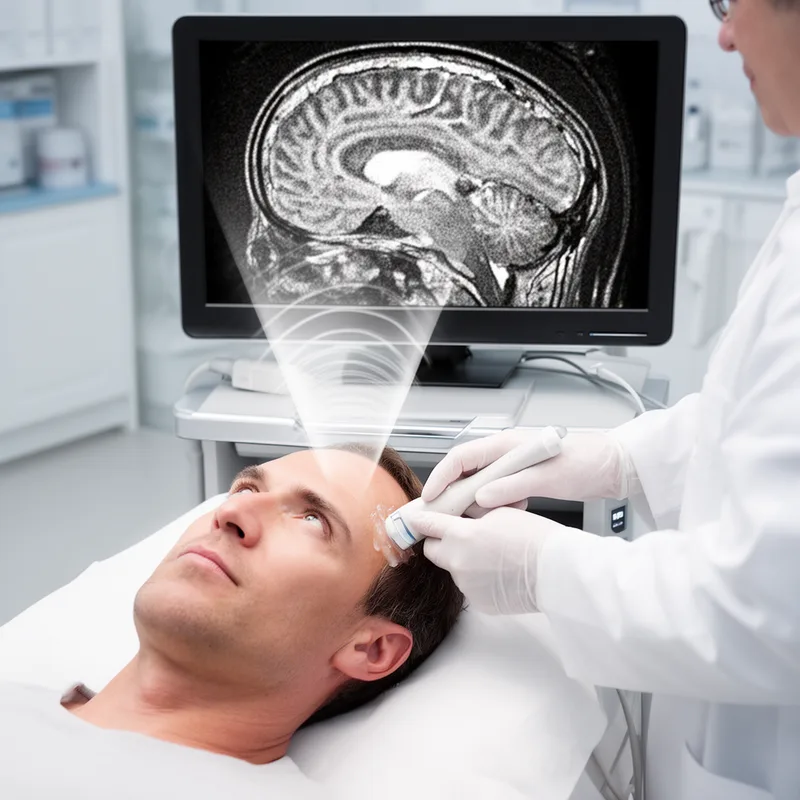
echoencephalogram
- noun
- /ˌɛkoʊˌɛnˈsɛfəloʊˌgræm/
- Specialized
- She underwent an echoencephalogram after experiencing persistent headaches.
Examples
-
The doctor reviewed the echoencephalogram to look for any signs of brain injury.
-
An echoencephalogram is a non-invasive technique used in neurological diagnostics.
-
The echoencephalogram was clear.
-
Did you see the echoencephalogram from the last scan?
-
The doctor reviewed the echoencephalogram to look for any anomalies in the patient's brain.
-
After experiencing dizziness, the patient was advised to get an echoencephalogram to assess brain function.
-
An echoencephalogram can help detect conditions that affect brain structure and blood flow.
Synonyms
 29
4.4

An image of the inside of the body made by sound waves to check a baby or organs


 1
7.9
An image made with sound waves to show internal organs or a baby before birth
How Informative
- Specialized
30
3.2

- Specialized
Surface Forms
Morphology
echoencephalogram = encephalogram (opaque) = echo + encephalo + gram
The prefix 'echo-' clearly indicates sound-based imaging, but the base 'encephalogram' is a specialized medical term made from combining forms that many learners will not know.
Etymology
Echoencephalogram is made of three parts: echo meaning 'sound that comes back', encephalo meaning 'brain', and -gram meaning 'picture', the same ending as in diagram. So an echoencephalogram is a picture of the brain made using sound waves.