

ebony wood
- noun
- /ˈɛbəni wʊd/
- He admired the beautiful grain of the ebony wood used in the elegant chair that complemented the room's decor.
Examples
-
In 1970, the Grosvenor Gallery in London exhibited "Makonde Sculpture," a collection of ebony wood carvings produced mostly by Mozambican migrants living in Tanzania.
Academic text (2002) -
The piano, crafted from exquisite ebony wood, produced a rich and melodious sound that filled the room.
-
The artisan used ebony wood to create intricate inlays on the surface of the luxurious dining table.
Synonyms
 4
5.5
4
5.5

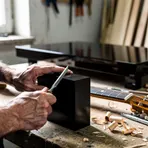
A very hard dark wood used for furniture and instruments
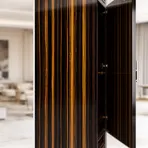
A dark tropical hardwood with bold black and brown stripes used for fine furniture
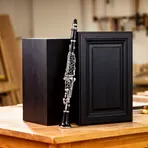
A very dark, dense wood used for furniture and musical instruments
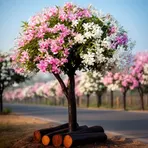
A small Asian tree with hard dark wood and pink or white orchid-like flowers
How Dense

Surface Forms
Morphology
The meaning 'a type of dark, dense hardwood' is directly and compositionally derivable from 'ebony' (a dense, hard tropical hardwood) combined with 'wood' (material from trees). This noun-noun compound simply specifies the kind of wood and follows transparent, cross-linguistically common lexical composition, so a B1 learner who knows both words will understand it.
Etymology
Ebony wood comes from trees whose heartwood is very dark, almost 'black'. Because the wood is very hard and looks rich, craftsmen long used ebony for fine furniture and musical instruments, so the name became the way to say a dark, 'valuable' wood.