

eastern hemlock


 1
7.4
1
7.4
- noun
- /ˈiːstərn ˈhɛmˌlɑk/
- US
- The forest is filled with towering eastern hemlock trees, providing shelter to various wildlife.
- eastern hemlock (Tsuga canadensis)
- eastern hemlock (Tsuga canadensis)
- spruce and eastern hemlock
Examples
-
With the combination of increasing temperatures and the potential selection for greater cold tolerance within hemlock woolly adelgid populations, eastern hemlock trees could be affected by this pest throughout their entire range within the next 30 years (Albani et al. 2010).
Academic text (2012) -
The forest is dominated by eastern hemlock (49% relative importance value), black spruce (16%), red maple (15%), yellow birch (9%), and blackgum (5%).
Academic text (2007) -
Great laurel and eastern hemlock
Academic text (2009) -
Suga canadensis, the eastern hemlock, the Redwood of the east.
-
In the northeastern United States, eastern hemlock is often used for making pulpwood for paper production.
-
During our hike, we noticed many eastern hemlock trees towering over the other forest vegetation.
Synonyms
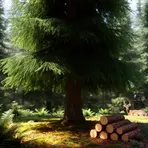
A large evergreen tree from eastern United States and Canada that gives dense shade and is used for wood
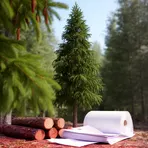
A large evergreen tree from eastern North America with short needles, used for wood and paper
Surface Forms
Morphology
The phrase is compositionally transparent: 'eastern' specifies geographic orientation and 'hemlock' names a tree species, so 'eastern hemlock' straightforwardly denotes the hemlock that occurs in the east. This modifier+noun pattern is productive and cross-linguistically common, so a B1 learner who knows both constituents can infer the meaning.
Etymology
Eastern hemlock may come from a story that early settlers thought the tree's soft needles and smell were like the poisonous plant hemlock, and eastern shows where it grows, so the name came to mean this large evergreen tree.