
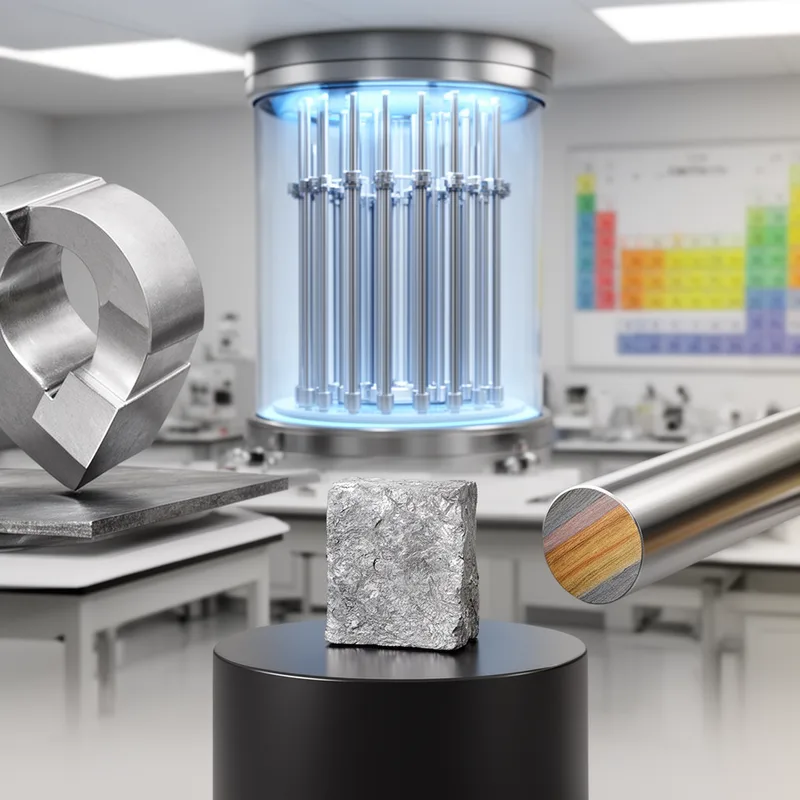
dysprosium
 1
9.5

- noun
- /dɪsˈproʊziəm/
- Specialized
- Yttrium, terbium, osmium, dysprosium, on and on and on.
- dysprosium and neodymium
- dysprosium and scandium
- dysprosium and terbium
Loading YouTube…
Watch on YouTubeSo you pull them out of the ground and then you have to separate the lanthanum from the dysprosium.
- So you pull them out of the ground and then you have to separate the lanthanum from the dysprosium.
Examples
-
In 2009, a proposed six-year economic plan would have banned exports of terbium, dysprosium, yttrium, thulium, and lutetium.
Academic text (2010) -
Not sure about dysprosium or hardtopronounceium.
Blog text (22) -
Such alternative energy sources as solar and wind use "rare earth" elements like dysprosium and neodymium to make better magnets to generate power.
Academic text (2010) -
I think the key elements are neodymium, dysprosium, and probably still samarium, since there is no adequate replacement for all of these.
Blog text (22) -
Other rare earths, such as erbium, terbium, and dysprosium, can also be used.
Academic text (1994) -
They went back to the lab and a year later returned and said, "All fixed—we added trace amounts of dysprosium to the mix."
Blog text (22) -
The telltale gamma de-excitation spectra of dozens of superdeformed nuclear species have been discovered in the years since the Daresbury group's initial discovery in dysprosium-152.
Academic text (1995)
Synonyms

 1
9.9
A chemical symbol for the metal dysprosium used in strong magnets
Surface Forms
Morphology
dysprosium = dyspros + ium
The suffix '-ium' clearly marks a chemical element (helpful for learners), but the root 'dyspros' is an obscure Greek combining form not recognizable as an English word, so the full meaning is not derivable from known English components.
Etymology
Dysprosium comes from the Greek word dysprositos, which means 'hard to get'. The part dys- means 'difficult', like in dysfunctional, so the name helps you remember that dysprosium is a rare, hard-to-find metal used in strong magnets and alloys.