
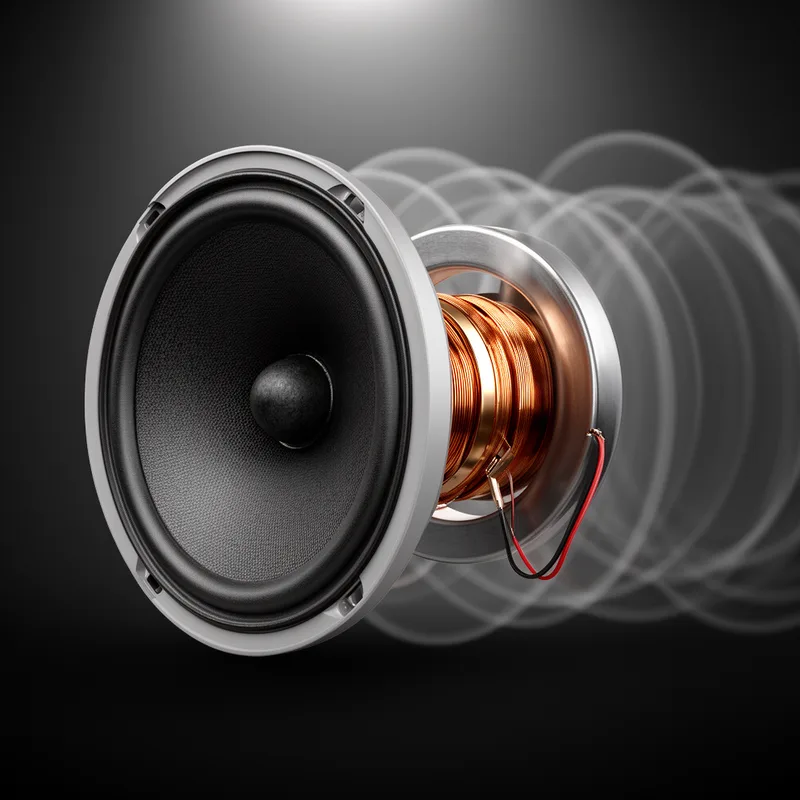
dynamic loudspeaker
- noun
- /daɪˈnæmɪk ˈlaʊdˌspiːkər/
- Specialized
- A dynamic loudspeaker converts electrical signals into audible sound by moving a diaphragm and voice coil.
Examples
-
Most modern audio systems use a dynamic loudspeaker to reproduce music and speech clearly.
-
Many musicians prefer dynamic loudspeakers for live performances.
-
The engineer replaced the old tweeter with a new dynamic loudspeaker for better sound quality.
-
The dynamic loudspeaker produces clear sound.
-
A dynamic loudspeaker produces sound by moving a diaphragm in a magnetic field.
-
Most modern home theaters incorporate a dynamic loudspeaker to enhance audio quality.
-
The new dynamic loudspeaker improved the clarity of the sound during the concert.
Synonyms

A speaker that makes sound by moving a cone attached to a wire coil near a magnet

A speaker that uses a small coil and magnet to move a cone and make sound
Surface Forms
Morphology
The compound combines 'dynamic' (relating to motion/force) with 'loudspeaker' (a device that converts electrical signals to sound), so a learner who knows both words can infer a speaker that produces sound by movement. However, 'dynamic' has multiple senses and the phrase denotes a specific technical design (moving diaphragm/voice coil), so the precise technical sense may not be fully predictable to a B1 learner.
Etymology
Dynamic loudspeaker was named for the way it makes sound: a light cone inside the speaker moves back and forth to push air and make sound. The word dynamic points to that 'movement' and loudspeaker shows it 'produces sound by moving', so the name means a speaker that makes sound by moving.

