
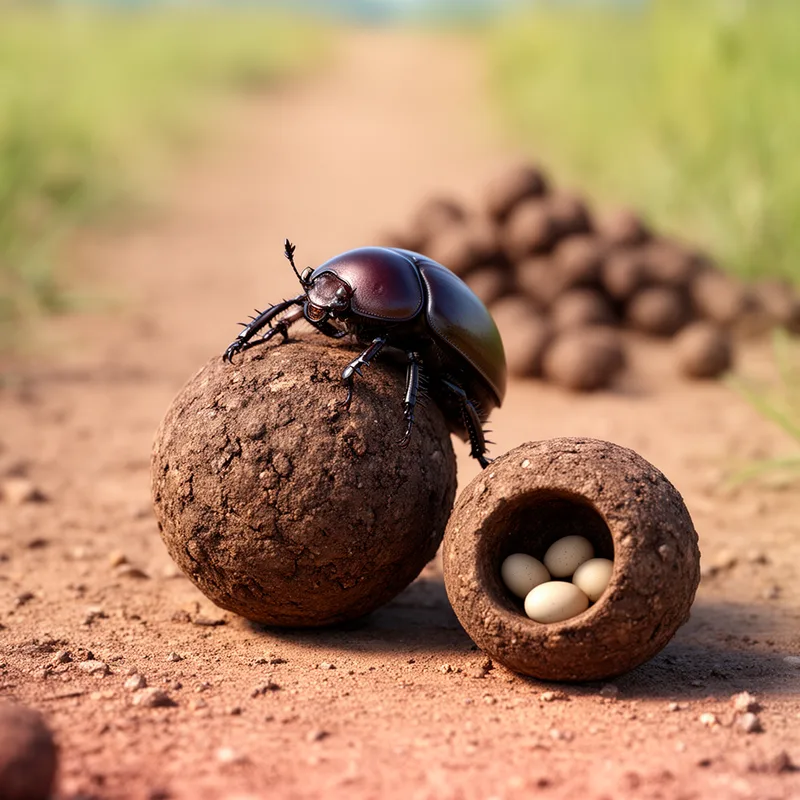
dung beetle
 3
4.4
3
4.4

- noun
- /dʌŋ ˈbiːtəl/
- The dung beetle rolls its ball of dung to a safe place to lay its eggs.
- dung beetle species
- the lowly dung beetle
- the American dung beetle
Examples
-
Meanwhile, the nutrients in the manure that wildebeests spread across the grasslands are recycled by millions of dung beetles.
Academic text (2006) -
The fundamental challenge facing dung beetles is, unsurprisingly, finding dung.
Blog text (5) -
You probably know that in Africa there is a specific insect, the dung beetle, which eats elephant feces.
Fiction book (1990) -
Dung beetles are perhaps the archetypal example of these ecologically important decomposers.
Blog text (5) -
Do not neglect the lowly dung beetle rolling her ball of waste to be buried in the sod to feed her larvae as well as to fertilize the plants.
Academic text (1994) -
In the wild, a dung beetle feeds on animal droppings, turning waste into new life.
-
On the African savanna, the dung beetle diligently collects dung to use for its nest.
Synonyms

A beetle that rolls balls of animal dung to eat or lay eggs
A large dung beetle that ancient Egyptians thought was sacred
Surface Forms
Morphology
The meaning of 'dung beetle' is directly and compositionally derived from 'dung' (animal waste) + 'beetle' (an insect): it denotes a beetle associated with dung. This noun–noun compounding is a straightforward and cross-linguistically common pattern, so a B1 learner who knows both words will readily infer the referent.
Etymology
The noun dung beetle comes from a beetle that rolls balls of dung across the ground to eat and to lay its eggs inside. That's why the name simply describes a beetle that lives on and moves dung.