
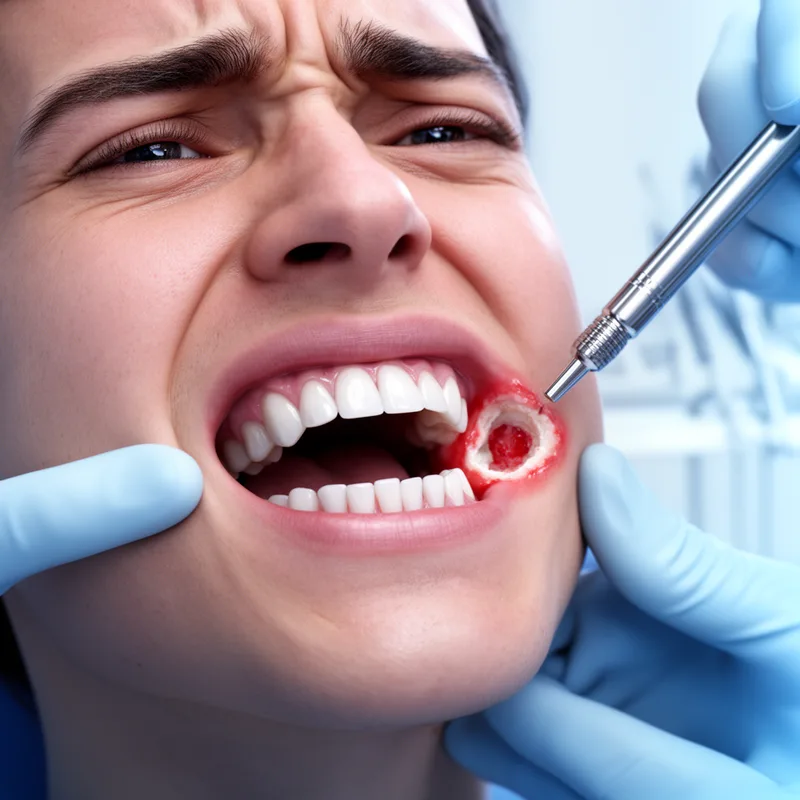
dry socket
- noun
- /draɪ ˈsɑːkɪt/
- Specialized
- He was warned that not taking care after dental surgery could lead to a dry socket, causing severe discomfort.
Loading YouTube…
Watch on YouTubeAnd sort of they excavate the tooth a little bit, and then if you clean it out too much, you get something called dry socket.
- And sort of they excavate the tooth a little bit, and then if you clean it out too much, you get something called dry socket.
Examples
-
After his tooth extraction, he was careful to follow his dentist's instructions to avoid a dry socket.
-
UH, YOU GOT A DRY SOCKET THERE.
-
She felt a sharp pain in her jaw, which was later diagnosed as a dry socket after her wisdom tooth was removed.
Synonyms
Inflammation of the empty tooth socket after a tooth is removed when no blood clot forms
How Painful


Surface Forms
Morphology
The phrase literally combines 'dry' and 'socket', so a learner who knows both words can infer a tooth socket that lacks normal fluid (i.e., something missing or abnormal in the socket), which points toward a post-extraction problem. However, the precise clinical meaning — a painful inflammation caused by loss/failure of a blood clot with exposed bone and nerves — is technical and not fully predictable from the constituents alone, making the expression only partially transparent.
Etymology
Dry socket comes from a clear, literal image: after a tooth is pulled, the socket is the 'tooth hole', and if the blood clot is lost the socket becomes dry, leaving bone and nerves exposed. So dry socket means the painful problem that can happen when the tooth hole is left dry after a tooth is pulled.